Barbara Fradkin, Donis Casey, Charlotte Hinger, Mario Acevedo, Sybil Johnson, Thomas Kies, Catherine Dilts, and Steve Pease — always ready to Type M for MURDER. “One of 100 Best Creative Writing Blogs.” — Colleges Online. “Typing” since 2006!

Showing posts sorted by relevance for query Thomas Kies. Sort by date Show all posts

Monday, September 22, 2025

Seeing Characters Come to Life

 by Thomas Kies

On October 14 and 15, actors from the Carteret Community Theatre will be performing MURDER ON THE MENU at the Culinary School at Carteret Community College.  Along with a stellar performance, there will be a brilliant three course dinner, a singer, and a multimedia mystery.  

The time, 1953.  The place, Paris, France.  The precise venue, Chez Beaujolais-the first American owned restaurant in Paris post-World War II. 

The Korean War has just ended but the Cold War rages on.  The guests for opening night at Chez Beaujolais:  Sally Willis, the first female US Ambassador to France.  Senator Winston Palmetto from the great state of North Carolina.  Captain Vladimer Smirnov, Soviet Ambassador to France and nephew of Nikita Khruschev


.

The two special guests are Dr. Cassandra Hawking, eminent US physicist, instrumental in the design of the first nuclear submarine, the Nautilus.  Sitting next to her is her love-stricken suitor, Elliot Chesson-Fitzpatrick, of the Boston Chesson-Fitzpatrick’s.

Okay, not only did I write this, but they were an actor short and now I’m playing the Russian ambassador.  My accent is driving my wife crazy. 

This is the third murder mystery dinner I’ve written for our local theater and the culinary school.  I have a blast because I love the theater…and food…and having my characters take on a life of their own.

Unless you get a movie or television deal, how often do you get to see your story unfold before your very eyes?  Hear your characters say your dialogue?  

And more importantly, I get to watch the audience.  I love it when they laugh at the jokes and work to try to solve the crime at the end of the evening.  How many people at those tables got it right? 

Sure, I can put playwright on my resume now, but I’m still learning the craft.  The very first year, at the end of the first act, I had to contend with a dead body in the middle of the dining room.  It’s just not fun trying to serve dinner around a corpse.

Kind of a distraction.  And not easy for the poor actor portraying the stiff. 

This year, I’m trying something a little different.  Sure, there’s a murder, but it happens long distance.  There’s no body to worry about.  But what is truly different, we have a main character that’s been poisoned, and we must find who the culprit is and get the antidote in thirty minutes, or the character will die.

There will be a ticking clock on the wall. The audience will be able to see how much time is left while watching the plot unfold before them.  

So, it’s a fundraiser for the culinary school at the college and for the community theater.  I may sell a few books at the event, but more importantly, I have an absolute blast. 

Monday, June 17, 2024

Is Coffee a Necessity for Creative Writing?

 By Thomas Kies


I’m hard at work on a new book (almost 240 pages into it) and I’m really excited with it.  It’s dark but not terribly violent and the protagonist, while professing his decency, makes decisions that could be considered borderline illicit. 

But what I’ve discovered is that the characters are drinking a hell of a lot of coffee.  So, I’m wondering, is it because I drink a hell of a lot of coffee? Admittedly, I feel the need for a hot cup on the table next to me as I write. I like the taste of it.  I enjoy the feel of the warmth of the cup in my hands…even on a hot day.  And yes, I like the addictive kick it gives me. 

My wife recently drove to Tupelo, Mississippi, to meet with her brother.  He lives in Texas and Tupelo is dead center between where we live and where he lives.  Tupelo also happens to be the birthplace of Elvis Presley.  So, Cindy, knowing I’m a coffee geek, brought me home something I don’t have—a coffee mug emblazoned with an image of the king with a tiny guitar serving as the handle.  


I began to wonder if other writers are coffee geeks.  I’ve read that a lot of writers work on their craft in coffee shops (something I’ve never been able to master---too many distractions).  But do they actually need the caffeine to be creative?  I found a few quotes that seem to confirm, coffee has its place in literary society.

"Where do you get inspiration for your books? I tell myself I can’t have another cup of coffee till I thought of an idea." — Douglas Adams 

"It is inhumane, in my opinion, to force people who have a genuine medical need for coffee to wait in line behind people who apparently view it as some kind of recreational activity. I bet this kind of thing does not happen to heroin addicts." — Dave Barry 

"I could settle down into a state of equable low spirits, and resign myself to coffee." — Charles Dickens. 

 "Reading in bed can be heaven, assuming you can get just the right amount of light on the page and aren't prone to spilling your coffee or cognac on the sheets." — Stephen King. 

"Even bad coffee is better than no coffee at all." — David Lynch. 

"Don’t look at me in that tone of voice." — Dorothy Parker (on having to interact with people before she's had coffee).  

"I believe humans get a lot done, not because we’re smart, but because we have thumbs so we can make coffee." — Flash Rosenberg. 

"Coffee is a lot more than just a drink. It’s something happening. Not as in hip, but like an event, a place to be, but not like a location, but like somewhere within yourself. It gives you time, but not actual hours or minutes, but a chance to be, like be yourself." — Gertrude Stein.

"The best maxim I know in this life is, to drink your coffee when you can, and when you cannot, to be easy without it." — Jonathan Swift. 


So, get yourself a cup of your favorite brew, sit down in front of your laptop, and continue writing. 

Monday, April 18, 2022

Cozy? Me? I thought I was Hard-Boiled!


 By Thomas Kies

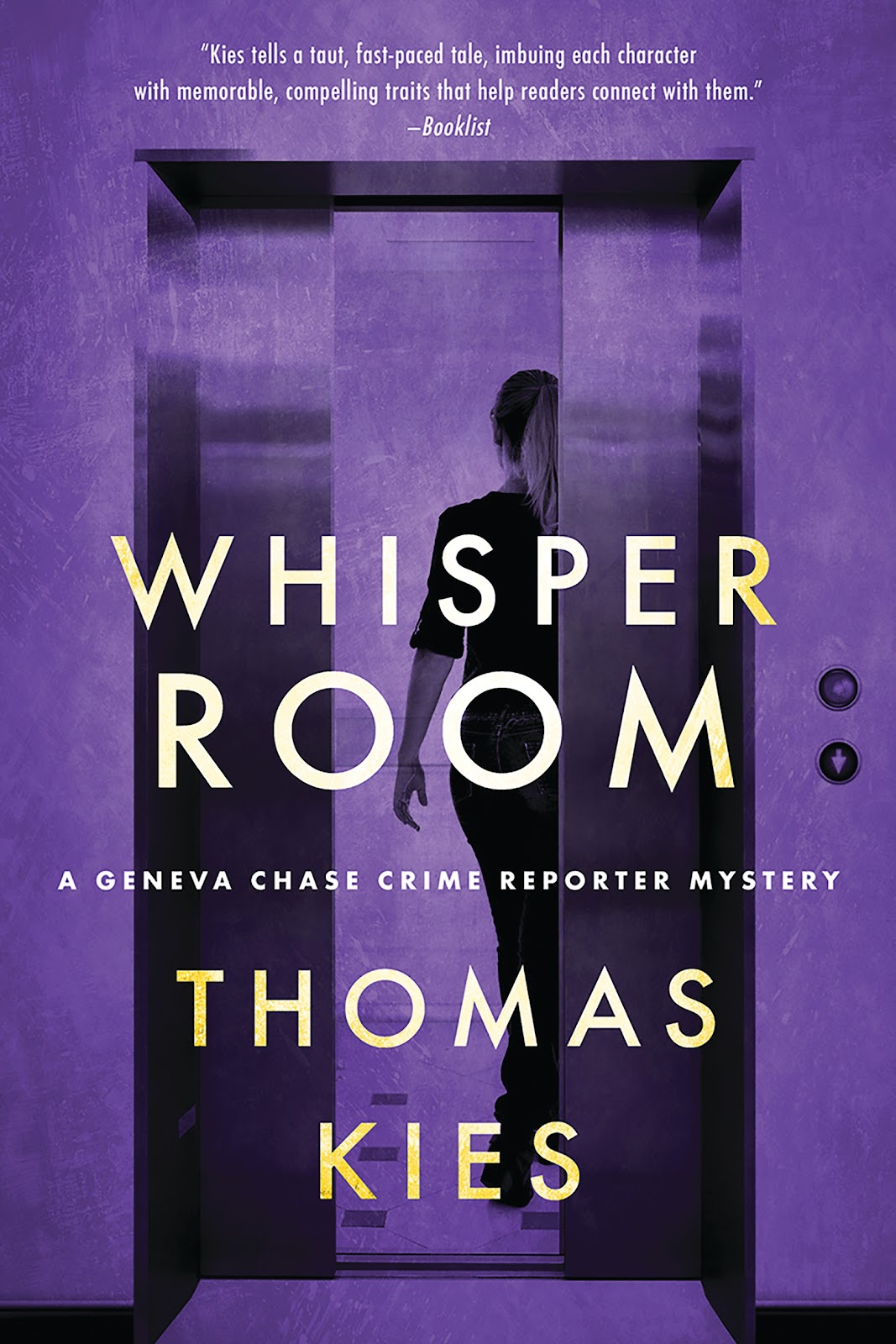
The ARC for WHISPER ROOM (release date, August 2) is available now for review and a few people have already commented on Goodreads.  I’m more than pleased that universally, so far, their reviews have been exceptionally positive.  I’m a bit taken aback, however, that two of them describe my book as a Cozy Mystery. 

I’m far from insulted, but I’ve never considered my books to be cozy by any stretch of the imagination. They’ve always been described as dark, twisty, and scary.  My neighbor read my third book, GRAVEYARD BAY, and when I asked him how he liked it, he told me, “The ending gave me nightmares.”

No cozy there.

The cozy mystery is a subgenre that has been described many ways, but I’ll try to distill it down as best I can.  The protagonist is usually female, an amateur sleuth, and the violence and sexual activity takes place off scene.  The setting is generally a small community where most people know each other

Interestingly, that kind of describes WHISPER ROOM. If you close your eyes and squint at it from a distance. 

Merriam-Webster defines genre as “…characterized by a particular style, form, or content.”

Primary fiction genres are: Romance, mystery, science fiction/fantasy, action/adventure, thriller/suspense, horror, historical fiction, and young adult.

Then there are subgenres. Amazon numbers them as 16,000 and calls them categories. 

Subgenres for fiction are: psychological thriller, cozy mysteries, historical mysteries, romantic suspense, spy thrillers, police procedural, private detective, legal thrillers, heist, locked room, noir, and supernatural thrillers.

Now, many of the subgenres for mysteries are obviously hybrids from the broad definition of genres listed above. 

My first book, RANDOM ROAD, was labelled a mystery but in reality, it was a romance novel with a mystery as the engine that drove the story forward. Girl gets boy, girl loses boy, girl gets boy, girl solves mystery, boy dies.  So, let’s add the genre of Tragedy to our list. 

How did Amazon label RANDOM ROAD? Hard-boiled mystery, amateur sleuth, women sleuths.  Nothing about romance at all.  I guess I hid it well.

I’ve taken a hiatus from teaching my Creative Writing courses at the college until this coming fall, but I think one of the exercises I’ll try is asking the students to take a book they’ve recently read, as well as a classic they may have read when they were in school and give it three classifications like Amazon might.

Like TO KILL A MOCKINGBIRD.  Would it be a Legal Thriller, a Coming-of-Age novel, or maybe Horror (Boo Radley was pretty scary…until he wasn’t)? 

Amazon actually classifies the novel as Teen & Young Adult Classic Literature, TV/Movie & Game Tie-In Fiction, and Classic American Literature.

I’ve never even heard of TV/Movie & Game Tie-In Fiction.

So, back to WHISPER ROOM.  The blurb reads: Sex, Blackmail, and Murder…Welcome to the Whisper Room.

Doesn’t sound cozy at all to me. 

Monday, April 07, 2025

Big Conference vs. Small Conference


By Thomas Kies

I confess, I’m signed up to go to Bouchercon in New Orleans in September.  After attending the one in San Diego two years ago, and then again in Nashville last year, I was reluctant to commit to going to another.  It’s not that they don’t do a good job.  They work hard at making Bouchercon a good experience for everyone involved.

That’s part of the problem, however.  There are so damned many people there.  I think there were over 1,500 participants in Nashville last year.

Yes, I love seeing old friends again, and yes, I love making new friends.  But honestly, I feel lost in the shuffle. 

In March I attended the Suffolk Authors’ Festival presented by the Suffolk Virginia Tourism Bureau.  They limit the event to about 50 writers across different genres.  The one-day event was attended by about 550 readers, many of whom bought our books. 

I had a chance to interact with almost all the other authors and spend a lot of time with attendees.  Because it was so small, the folks who put it together spent a lot of time and effort to make sure we were all happy. 

That includes coffee and snacks in the morning, lunch, and then a really nice dinner, exclusively for the authors along with an open bar.  Anytime you have an open bar for authors, you’re making friends. 

That final evening, I spent drinking wine and talking with the likes of John DeDakis, John Gilstrap, K.L. Murphy, Jeffrey Higgins, and Bill Rapp.  Earlier in the day, I was on a crime panel with Maya Corrigan, Esme Addison, Jenna Harte, and Carrie Ann Knox, none of whom I’d ever met before, but were delightful.

The cool thing about the panels at the Suffolk Festival was there was only one panel at a time.  The room was filled with attendees.

 Don’t get me wrong, if I didn’t enjoy going to Bouchercon or Thrillerfest, I wouldn’t spend the money.  And those events, after the airfare, hotel, food, and bar tab, are pricey.  My publisher, Poisoned Pen Press/Sourcebooks, has always put together a wonderful book signing at Bouchercon.  The event organizers do their best to put as many authors on panels as humanly possible. 

The dilemma with so many panels is that there are multiple panels going on all the time. Some are very well attended…and some aren’t.

There are so many attendees that if you’re not an extravert, you’re going to get lost in the crowd.  And let’s face it, an awful lot of authors are introverts.  At the bigger events, you’ll have a better chance to meet editors and agents than at the smaller venues, but sometimes, it’s at an additional cost.  

The point of this piece?  Don’t overlook the smaller events.  The big ones are good, for sure, but it’s easy to feel lost in the crowd.

Monday, June 13, 2022

Younger Readers Discover Agatha Christie


 By Thomas Kies


A little a week ago, I attended Thrillerfest in New York.  It was my first in-person conference since 2019 and I loved it.  The organizers of the conference did a terrific job even though it was at a different venue than it’s been in the past.  The Sheraton Times Square is a wonderful facility, but it took me a couple of days to figure out the configuration of the conference area.  

Because of Covid, it appeared that attendance was down, and I noticed that a couple of the panels were missing some of the participants.  Toward the end of the conference, there was a panel on News and Investigations.  Three participants were missing leaving only two authors and the facilitator.  In an interesting quirk of fate, John DeKakis, formerly a CNN writer for Wolf Blitzer, and I were drafted to sit on the panel.

Yes, I had my own panel the day before.  This was just extra and something fun.

But even with the threat of an uptick in Covid, there were hundreds of attendees including authors, publishers, agents, and most importantly, readers and fans. Everyone seemed to be enjoying themselves.

In Friday’s Wall Street Journal, there was in an interesting article entitled “Young People Discover a Hot New Writer—Agatha Christie.” It talked about how a young generation has “discovered” Christie.  Indeed, scrolling through TikTok, videos labeled #AgathaChristie have clocked in at 26 million views. 

Sales of Agatha Christie books in the US have risen 39% in the first quarter from last year’s period according to book tracker NPD BookScan. 

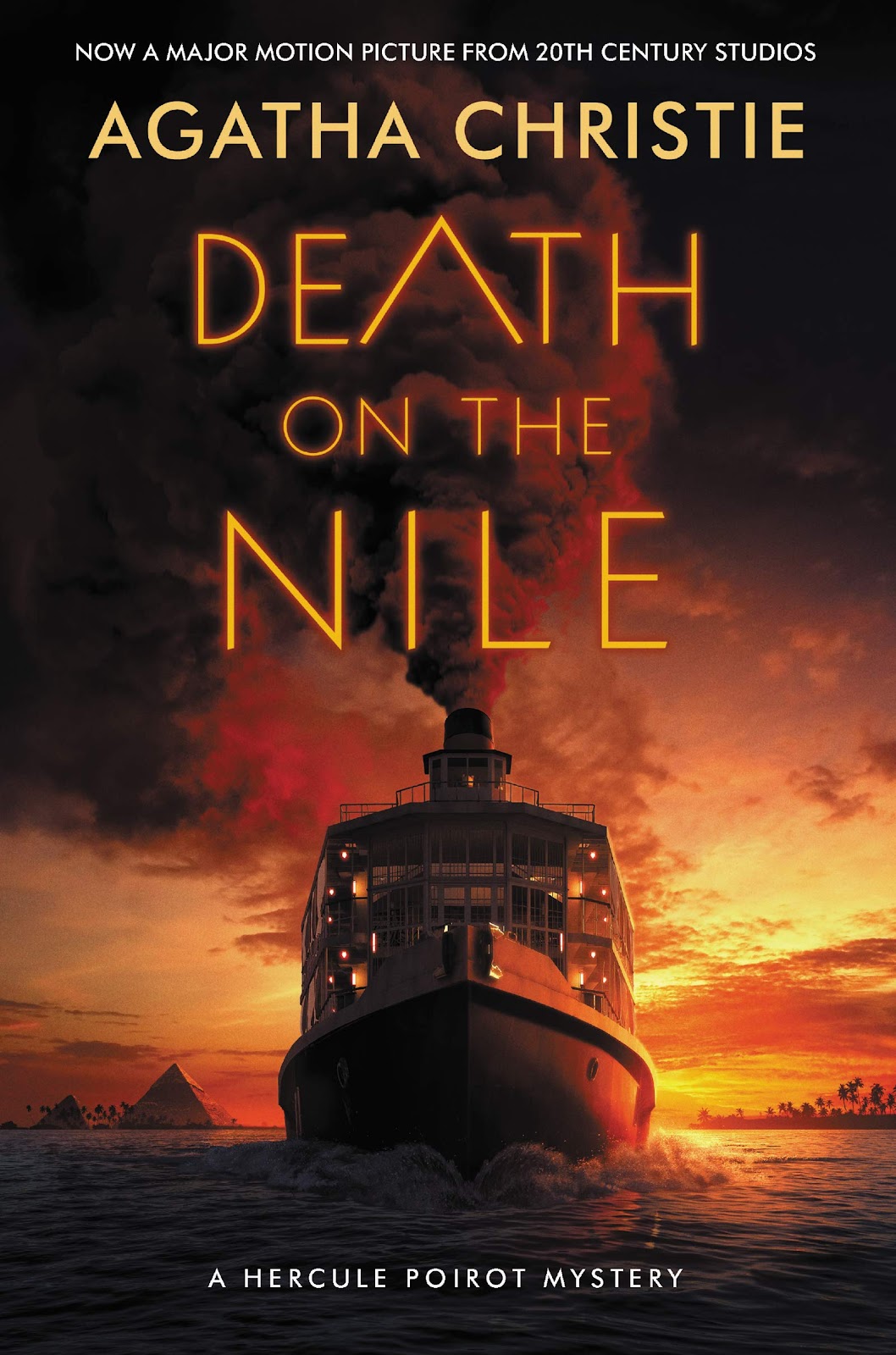
Part of the reason may be the popularity of the 2017 movie “Murder on the Orient Express” that featured Kenneth Branagh as Hercule Poirot.  Then there was another spike in popularity when the 2022 movie “Death on the Nile” arrived.  

Indeed, at ThrillerFest, it appeared there was an increase in interest in mysteries and thrillers from those who are under 40, both readers and writers. I have no hard evidence of that.  Only my observations in the panel rooms, the cocktail parties, and at the hotel bar.  You know…the typical mystery writer hangouts.

So, let’s go to the basics.  Why do people like mysteries and thrillers?  It’s an opportunity to sit at home, or on a train, or in a coffeeshop, safely, and experience danger, fearsome scenarios, and life and death struggles with some really nasty villains. In a world fraught with injustice, nearly all of these books have a satisfying ending.  The bad guy is brought to justice, the good guys win.  That’s life as it should be. 

It also gives us a chance to match wits with the detective.  If the mystery is well written, the clues are all there.  You simply have to recognize them and figure it all out…before the ending. 

But if it’s well done, the reader should get to the ending, slap his hand against his forehead and say, “Of course, I should have seen that coming.”

And that’s another reason why Agatha Christie is finding a renewed audience. She wrote 72 novels, 150 short stories, and 20 plays over a writing career that spanned fifty years.  She’s synonymous with writing intricate stories, incredibly clever plotting, and red herrings…leaving trails of false clues. 

In addition to meeting some great people and interesting characters at a conference like Thrillerfest, you inevitably bring home a new cache of books, many from authors you’ve never heard of.  That’s part of the thrill of Thrillerfest.  While some readers are just discovering Agatha Christie, others are discovering new mystery writers. 

Speaking of new…my newest Geneva Chase Mystery, WHISPER ROOM, will be released on August 2nd.  I hope you’ll read it and let me know what you think. 

Monday, July 10, 2023

Writing and Insecurity


By Thomas Kies

I’m nearly finished writing the first draft of a new book.  It’s not part of the Geneva Chase series which I’ve loved doing.  This has a male protagonist (kind of nice not writing as a woman for a change), different location (I love Connecticut, but the cost of living is wicked high and it’s time to write a mystery using new scenery), and a different vibe.

My publisher hasn’t committed to the book, and I don’t know if they will. I hope they do.

As a matter of fact, there’s no guarantee that it will ever see the light of day.  It wouldn’t be the first time I’ve written a novel that was never published.  As a matter of fact, before I found an agent (she’s the best) for Random Road, I had written four other books.

Before Random Road, was I feeling insecure?  Hell yes.

I still am. 

As I continue to steam ahead on the new book, there are some days where I think this is the best piece of fiction I’ve ever written.  And then, later that same day, I wonder if it’s the worst piece of crap ever knocked out on a laptop.

Yeah, insecurity.  

I asked my browser if any other writers have suffered from insecurity.  This is what it said:

Yes, many famous writers have suffered from insecurity. For example, Ernest Hemingway was known for his insecurities and his tendency to compare himself to other writers. F. Scott Fitzgerald also struggled with insecurity throughout his life. Virginia Woolf was known to have suffered from depression and anxiety, which often made her feel insecure about her writing.

● "I have written a great many stories and I still don't know how to go about it except to write it and take my chances." - John Steinbeck

● "I have spent a good many years since―too many, I think―being ashamed about what I write. I think I was forty before I realized that almost every writer of fiction or poetry who has ever published a line has been accused by someone of wasting his or her God-given talent." - Stephen King

● "I am irritated by my own writing. I am like a violinist whose ear is true, but whose fingers refuse to reproduce precisely the sound he hears within." - Gustave Flaubert

● "I have never started a poem yet whose end I knew. Writing a poem is discovering." - Robert Frost

I’m going to get back to writing.  Luckily, at this point, unlike Frost, I know what the end looks like.  When I started, the characters were foreign to me.  The villain or villains unknown.  The story yet to unfold. 

Now the characters are like old friends.  I hope you get to spend time with them as well.

www.thomaskiesauthor.com

Friday, July 19, 2019

Conference Envy


My fellow Type M'er, Thomas Kies, posted a report on Thrillerfest, a writer's conference held in New York this month and I confess I was seized by more than a touch of envy. I always learn something and meet new people at any conference and this one was full of terrific panels and workshops.

Thrillerfest sounds especially exciting. The line-up of speakers was spectacular. It was like a gathering of all the rich and famous in the mystery field. Conferences are also a chance to meet the not so rich and famous. I can honestly say some of my best friends are writers that I met at conferences.

Above is a photo from this year's Western Writers of America convention. It was taken at the Five Star party. In the middle is our brilliant editor, Tiffany Schofield, who is one of the most friendly persons in publishing. Her frontier series featuring historical novels about the American West has been a great hit both with librarians and readers.

I'm on the left. Having just discovered a western hat that fits I longer have to worry about my hair. What a relief. On the right is Irene Bennett Brown. I look forward to seeing her and her husband, Bob, every year. Irene and I have known each other forever. She and Bob started attending in 1978. Her book, Miss Royal's Mules, is a finalist for a Will Rogers Medallion Award. Her new book, Tangled Times will be published Summer, 2020.

Old friendships can be dangerous at conventions because of the temptation to spend all my time with people I already know and like.

I would love to go to Thrillerfest next year. I have a number of friends who attend. Plus this year a number of person's from Sourcebook were there. Sourcebook acquired Poisoned Pen last year and the conference would have been a great opportunity to meet representatives from our new publisher.

I don't like posting on the day mine is due. I like to schedule it at 12:01 am so our early morning readers will have fresh content. This has been a very harried summer full of disruptions. Most of them were good. But still, my writing has been interrupted a lot. Then everything else lags too.

Better performance next time!

Tuesday, January 28, 2025

You Have the Time

Catherine Dilts

One hour. My co-author informed me her window of opportunity was constrained that day by being the Mom Taxi. We could skip our writing session. Or try to accomplish something in sixty minutes.

My co-author is my daughter. Last year we embarked on a writing project that was successful, despite our busy schedules. We’re working on a new project right now that we’re both wildly enthusiastic about.

If only we had the proper amount of time to work on it.


Working with my daughter required experimentation to hit the right methodology. We write using shared files, and talk over the phone, at least 90% of the time. Just as working the former day job from home trimmed off get-ready-to-face-the-world time, plus the commute to the office, co-writing via the ether saves a lot of time.

One hour. Even having trimmed off travel to meet in person, that’s still a slim quantity of time.

Becoming a multi-published author while working a fulltime job required workaholic energy. I’ve recently retired, so my expectation was that limitless time would mean even more output. Life gets in the way, in the same manner that the day job used to put hedges around my day.

Why sweat it? Unless you're working under contract, you can take all the time in the world to write your story. Writing fiction can be a strictly creative endeavor. You can write for the love of the wordplay. You can take years to craft the perfect tale. 

I came from a manufacturing environment, and my daughter from the academic world. We’re both accustomed to deadlines. For me, writing is only part creative whimsy. The other part is publication. Getting the story into the hands of readers. Hopefully including the reward of a paycheck. At some point, the product needs to be shipped, and the grades reported.

I do have a book of the heart that will not be quick to complete to my satisfaction. I sometimes spend a crazy amount of time on short stories. But other work needs to happen at a fast pace. Get it done.

Lately, my daughter and I have realized that an amazing amount of work can be accomplished in just one hour. With the clock ticking off the precious minutes, we tear into the task at hand. We get a plot roughed out and an outline half completed.


Here are two suggestions to enable you to get 'er done:

One: Do an on-line search for “write a novel in a year” and you’ll find dozens of helpful articles. Just saying “I will write a novel this year” will doom you to failure. You need to set word counts and deadlines. “I will write a page a day.” That’s approximately 250 words. 365 pages in a year. A novel.

Two: National Novel Writing Month (NaNoWriMo) pushes writers to complete 50,000 words in a month. I’ve done this. It’s grueling. The end result is a terrible rough draft. But it’s the rough draft of a novel. Material that can be refined, expanded, trimmed, edited, and tamed into something terrific.

“I don’t have time to write a novel” doesn’t fly with me. If you really want to do it, you will find a way. Or not. There are plenty of other ways to spend your time on this earth. Maybe writing’s not it.

If you do have a story aching to be told, get after it. Nobody’s going to write it for you. Devise a plan. Set quantifiable goals. Hold yourself to your own interior deadlines while you strive for the exterior deadline of publishing contracts and timelines.

You can get it done. One hour at a time. One hour is enough.

(If you have a hard time ignoring life’s distractions while you attempt to write, check out Sunday’s article by Thomas Kies.)

Monday, April 04, 2022

Short Chapters


 By Thomas Kies

I was recently asked by a fledgling writer about how long a book should be. I told him that the book is as long as it takes to tell the story, but generally speaking, it appears that the word count should be anywhere from 60,000 words to 110,000.  

Last week Douglas Skelton did an excellent blog on books he’s pulled off his bookshelf, blew away the dust, and reread, such as Ed McBain, Robert Ludlum, and Harold Robbins.  These were books he read early on in his life.

It made me think of some of the authors I read when I was much, much younger.  I think back fondly on the James Bond novels by Ian Fleming.  Back then, the Signet paperbacks were only sixty cents, but we’d read them, trade them for others, and talk quietly about them.  Don’t let the teachers see you with those books, after all, some of them have sex scenes. 

The way Bond treated women back then, we’d consider misogynistic now. 

I was absolutely hooked on the John D. MacDonald novels featuring Travis McGee.  The premise of the McGee mystery/thrillers was that McGee was the finder of lost or stolen things, a self-styled “Salvage Consultant”. He lived on a houseboat in Florida that he won in a poker game called the “Busted Flush”. And all the covers of those paperbacks seemed to feature a semi-nude woman.  Don’t let the teacher catch you with any of those either.

But I also became addicted to the wildly popular novels of James Michener.  His books were amazing…and amazingly long.  His book Hawaii is nearly a thousand pages. Centennial was over a thousand pages long.  Not something you’d likely see in a novel now.  Most of his books would begin with long chapters about the cultural and geologic history of whatever region was the subject matter of that particular novel. 

Could a writer get away with that now?  Not a chance. 

Novels need to start fast, be tightly written, and don’t even think about writing a 1,000-page book. Even chapters are shorter.  People's attention spans are shorter, their time is in demand from their jobs, families, and the world around them. 

Before getting published, I attended a writer’s conference and sat in on a workshop where the facilitator insisted that all books have chapters that were around twenty pages each.  I’ll admit, that in my first novel, Random Road, some of my chapters were around that long.

But as I continue to write, my chapters have become shorter, in some cases four or five pages.  It’s basically a scene and once that scene is over, bam, time move on to a new chapter. 

Why short chapters?  They make a good stopping point.  Maybe the reader only has fifteen minutes set aside per day (or night) for reading.  Or they have just so much time on their train commute. Or that's just the time they've set aside before their next task. 

But the funny thing is that when we give the reader a place to pause, they keep reading. 

The biggest compliment I get is when a reader tells me they couldn’t put a novel of mine down, that they read it in one sitting or over the course of several days.  

And I thank them for the compliment in spite of the fact what it took them a day or so to read, it took me nearly a year to write. 

Monday, November 27, 2023

Weather or Not?


 By Thomas Kies

On Saturday I was the emcee at a Small Business Vendor Holiday event at our local community college where I also happen to teach Creative Writing.  There were 140 vendors that were in attendance, and I’d be introducing local dance and singing acts.  It was an all-day event and in return for my services, they kindly gave me a spot to put up a tent, set up a table, and sell and sign a few books.

I thought, what the heck?  This was a holiday event.  What makes a better gift under the tree than a mystery signed by the author?

Things never go as planned.

On Thanksgiving, just a few days prior to the event, the weather here on the coast of North Carolina was sunny and in the seventies. On Saturday, the temps had dropped to the high forties—low fifties and the winds had picked up to gusts of over twenty miles per hour. 

I started the morning by unloading the car and then attempting to put up the canopy.  In that wind, trying to do that alone, it became a hilarious wrestling match.  The struggle was not only to put it up, but to keep it from flying away and becoming a lethal missile.  

After a half-hour battle, I was sweating, breathless, and frustrated.  I looked around to see if I could find one of the other vendors to give me a hand.  They were all having the same problem.

Most had reached the logical conclusion which was not to put the canopy up at all. 

While overcast, it wasn’t supposed to rain so I put the tent back into the back of my car and parked it in the adjoining lot.  Then I set up the table and had a similar problem with the tablecloth.  It was like something out of a Buster Keaton movie.

I’d have one end of the tablecloth laid down when the other end would go flying around as if it was possessed by a demon.  Since my wares were books, they ended up being my weights. 

It was a smaller than expected crowd.  As I said, the weather was cold and very windy.  Many vendors gave up and went home early.  Cindy, my wife, joined me a little later in the morning and that helped rejuvenate my spirits. She gamely greeted shoppers as they drifted by and even managed to sell books when I was on stage introducing the next gaggle of kids choreographed to dance to Christmas Carols. 

When she started to shiver however, I asked her to go home.  I stuck it out the rest of the day and I did sell more books than I should have on that miserable afternoon.

Okay, so it wasn’t the most conducive day to sell books.  But it’s the kind of day I enjoy when I’m writing. Here it is, the day after and still cold, not as windy, but dark and it’s raining off and on.  For me, that’s perfect writing weather.  

If it’s sunny and warm, I feel like I should be outside doing something.  If it’s nasty out, I love being inside with a cup of hot coffee, listening to some soft music, and sitting in front of my laptop, knocking out another chapter or two.  

Our environment is an important part of our writing process.  Some of us can be more productive when we’re free of distractions while some other writers are happier in a bustling coffee shop.  Some of us love to listen to a little jazz while we create, and others need total silence.

When I teach my creative writing class, one of the subjects we discuss is finding a place that’s comfortable for you, a place where you can feel creative.  And to get into the rhythm of writing every single day.  

Where do you like to write and does the weather impact your writing? Do you enjoy music while you’re creating or do you need the quiet? 

www.thomaskiesauthor.com

Monday, August 11, 2025

Point of Sale

 by Thomas Kies


Most of us have been there.  You go to a planned book signing at a library or a bookstore where nobody has heard of you and you- and maybe your spouse- are the only ones there.  Where it’s so quiet you can literally hear the clock ticking in the next room.  Where everyone avoids making eye contact with the author. 

Or at a book event or authors’ fest where there may be a dozen other writers, but once again, the audience is sparse, and you’ve just spent six hours of your life staring into space.

Those are humbling experiences.

So, I get a lot of requests for attendance, but I’ve become much more selective.  Let’s face it, time is a precious commodity.   

One of the events I do attend is something called the Olde Beaufort Farmer’s Market.  Now, admittedly, this sounds like it could be lame.  Can you really sell books in the same location that feature fruits, vegetables, and crochet animals?

Yeah, at this one you can.  At one point Beaufort was named the coolest small town in America. It’s got a vibe.  And the Farmers Market isn’t’ just for farmers. It’s also got some very eclectic items on sale, like gourmet coffees, baked goods, fine arts, cool jewelry, funky clothes and, of course, shrimp. We are, after all, on the coast of North Carolina. 

During the summer, this is an event that takes place every week, but once a year, they ask local authors to attend. I love this event.

This past weekend, I went through cases of my novels.  The people who attend this event are both locals and tourists, both of whom come to spend money.

Yeah, you still have to work the crowd.  You have to make eye contact.  If they look interested, you ask them, “Do you like mysteries?”  If they say no or tell you they don’t like to read, send them packing. They’re not going to read your books. 

If they say “yes”, you’ve got them.  Engage them in conversation, tell them about your books, how you came to create your protagonist, the writing process, and what makes your books special. Try to do it with humor and humility. 

Accent on the humor. 

What’s fun is if they’ve heard of you or seen your books somewhere before. 

There was one woman, when she spotted a poster featuring my first book, Random Road, rushed to my booth with her friends and exclaimed, “I just read that book.  Are you really the author?”

I live for those moments.  She kept telling everyone around us how much she enjoyed the novel and then proceeded to buy the rest of the books in the series.  

And then there was the group of young ladies in the early part of a celebration of their friend’s looming nuptials.  Seeing the future bride, I gave her a signed copy of Random Road as a gift and told her, “Here, you can take this on your honeymoon.”

The group broke out in laughter.  She smiled at me and purred, “If nothing else, I’ll read it by the pool.”  Two others in her entourage bought books. 

Obviously, it helps if you’re an extrovert, which I am, and enjoy talking with people. What I also love is that if they buy one book, they’ll order more.  I always see a spike in online sales after this event. 

Make sure you can take credit cards; more and more people don't carry cash anymore.  And more than once, a younger buyer asked if I use Venmo.  I don't, but I might have to take a look at it. 

So, I try to be selective these days when and where I spend time with my books. But I also try to keep an open mind.  You never know where there will be an unexpected success. 


Monday, January 11, 2021

Puppies and Pandemic Road Trips


  By Thomas Kies

I was going to do a sequel to my blog “Recipe for a Thriller No One Would Believe” about the insurrection at the Capitol in Washington DC, but I just couldn’t.  It’s just all too sad and I’m embarrassed for our country over it. 

So, I’ll write about something much more fun.  Lilly, our Shih-tzu and my writing buddy, passed away in September.  No, that’s not the fun part.  That was heartbreaking. 

Starting in December, my wife Cindy began searching for a Shih-tzu rescue to come live with us.

The pandemic has created a remarkable demand for pet company and the results are that there is a shortage of rescue dogs available to adopt.  My wife worked hard at trying to find a rescue. 

Finally, Cindy found an adoption agency that was looking to place a two-year old Shih-tzu named Annie Willow that had been rescued after being abandoned at a kill shelter.  They vetted us and on Thursday they told us we could come meet the girl on Saturday morning in Charlotte, North Carolina.  That’s a five-hour drive from where we live.

We packed our bags and took off on Friday to stay overnight and then meet Annie Willow the next morning.  

Now, this was the first overnight trip we’ve taken since March, when the pandemic began its horrible march throughout the world.  Things have markedly changed.

Starting with choosing the hotel.  It used to be comfort, location, and price that was how we decided on where we’d stay.  Now it was how they disinfected their rooms.

Then it was the drive.  Before, I looked forward to stopping off while on our journey where we’ve never been for a leisurely lunch.  Now we packed our lunch before we left so we could eat in the car. 

We did stop once to get gasoline and use the restroom.  In the convenience store where we were, they weren’t selling coffee.  Another result of the pandemic. 

Once at the hotel, what few people who were guests, as well as employees, wore masks (thank heavens) and discourse was kept at a minimum.  Distance was observed.

Here’s where I want to say something about writing, since Type M is a blog about the process.  In particular, about writing dialogue.  I have always enjoyed listening in on conversations so I could catch both discourse and dialect.  Now, however, there’s little of that to eavesdrop on. And what I do hear sounds like little more than mumbling.  

Back to our trip.

It was no surprise that we discovered that the bar was closed at the hotel and the bistro where you could get breakfast was also shut down.  There would be no hotel waffles for us in the morning.

When it came to getting something for dinner, we called a nice Italian pizza place in the neighborhood and had dinner delivered at the hotel.  

The next morning, we met the representative from the adoption agency and the woman who had been Annie Willow’s foster mom.  Everyone wore masks.  I never saw their faces.  That seemed so sad.  I’m sure we were all smiling from ear to ear.

Although, when I asked how the foster mom was doing, she told me, “I’ll be crying in my car in a few minutes.  I’ll be missing Annie.”  It must be difficult to foster a puppy, loving it, knowing that if you’re successful, you’ll be handing it over to someone you don’t know.  It must be like losing a piece of your heart. 

It was also when we met Annie Willow, who’s a cutie with the energy of an overcaffeinated ferret. She is definitely going to keep Cindy and me on our toes. 

It was a bright spot in an otherwise abysmal week.  Two friends of ours tested positive for Covid-19.  One is in the hospital but recovering nicely and the other has had mild symptoms.  

Unfortunately, thousands of others are dying every single day.  Hospitals are stretched to the limit but vaccinations, while slow and chaotic, are coming.

And then, of course, there was the insurrection at the Capitol on Wednesday at the urging of a sitting President of the United States.  I never thought I’d ever write or say those words.  Never.

The nation is divided, the possibility of a second impeachment is imminent, and I fear for what could happen before the inauguration of a new President on January 20.

It’s no wonder so many of us have looked to the unconditional love of a puppy. 

Monday, November 15, 2021

My Process


 By Thomas Kies

I’m going to riff off of Donis Casey’s excellent blog this week about her writing process.  

Mine is best described as chaotic.  As a rule, I have a general idea what the book will be about and the location.  Sometimes I even have thoughts on what the plot will be and who the villain or villains are.

But not always.

The book I’m currently working on I’ve started six times already.  Not unusual for me.  At some point, about thirty or forty pages in, I either like what I’ve written, or I don’t.  Six times now, I haven’t liked what I’ve created.

Initially, when I started this project, I had an idea for an opening scene but wasn’t sure how it might work so I mentally filed it away.  Plus, it was a murder scene that felt a little gruesome to me.

But I recalled what Barbara Peters, my first publisher and owner of the Poisoned Pen Bookstore, had told me during a live interview online.  “All of your books open with a murder, each one a little more gruesome than the last.” 

After six false starts and a long walk around the neighborhood, I decided to scrap everything I’d done up until then and start over…using that scene I had originally envisioned. 

I love it.

Now I’m about thirty pages into the project and I’ve completely changed the direction I’m taking the book.  Do I know where I’m going with it?  Kind of.

Stephen King said in a Wall Street Journal interview, “The thing is, I don’t outline, I don’t have whole plots in my head in advance. So, I’m really happy if I know what’s going to happen tomorrow, which I do, as a matter of fact, I know what’s going to happen in the novel I’m working on. And that’s enough.”

Now, so I don’t start out with an outline.  That being said, at some point during the writing of the book, I know where it will end up and who the baddies are.  I just have to find a way to get there.

That’s when I start outlining what has to happen to move me to that final scene. 

Then at a certain point, I know I have to lay clues.  You can’t have a mystery if the reader doesn’t at least have some kind of chance to solve the crime. But the clues have to be subtle and that’s where I have the advantage.  

I can go back into what’s been written, like going back in time, and alter what I’ve created.  

The same goes with dialogue. Haven’t you had a conversation with someone and wish you could have said something differently?  I can do that. 

Back to laying the clues out.  You don’t want them to be too obvious or the reader will figure out who the baddies are about halfway through the story. What you want is to have them reach the end of the book, and slap their forehead and say, “I should have seen that coming.”

So, now, I’m going to take a walk down to the beach and then come back, sit down at my keyboard, and knock out another chapter.

Cheers and I hope you have a wonderful Thanksgiving.

Monday, September 23, 2024

Bouchercon 2024

 By Thomas Kies

While it seems like a long time ago, it's only been a couple of weeks
that I had the pleasure of attending Bouchercon 2024. The Anthony Boucher Memorial World Mystery Convention, is an annual convention of creators and devotees of mystery and detective fiction. It is named in honor of writer, reviewer, and editor Anthony Boucher, and pronounced the way he pronounced his name, rhyming with "voucher".Unarguably the world’s largest mystery writers’ conference, this year’s event was held in Nashville and was attended by over 1,700 participants. 

Every time I go to Bouchercon, I come back, review my credit card statement, and ask myself, “Was it worth it?”

Of course it was.

If only from the standpoint of seeing some old friends, making some new friends, and getting the latest “scoop” from other writers, readers, publicists, voice actors, and folks who just love mysteries.  

It was held in the world’s largest Marriott hotel--the Gaylord Opryland Resort and Convention Center is like something out of a science fiction movie.  It’s basically a small city under a glass dome, complete with a river and boat, waterfalls, fountains, restaurants, bars, swimming pools, water attractions, and live music. The hotel consists of 3.3 million square feet of space, 2,888 guest rooms, and event space for a capacity of 10,000 people.

The first few days, literally everyone got lost getting from point A to point B. The hotel has its own directional app you download on your phone.  


On Thursday, my publisher and publicists organized an afternoon long book signing session for Poisoned Pen/Sourcebooks authors.  Each one of us easily went through a couple cases of books.  I love my publicists, and it was great to have a couple of drinks with them later in the evening, along with some other writers, and learned that the same people who represent my books, also represent Freida McFadden (the hot new “it” mystery writer on all the best seller lists).  

The next day I was on a panel entitled “That’s One Body They’ll Never Find”.  The intent, I believe, was to talk about real life crimes that helped shape you as a writer or you incorporated in your books.  It took a strange and morbid turn when, instead, we started off by recounting crimes that still haunt us. Many of them are unsolved. It got so dark that one of the panelists was in tears.

I finally offered to the audience that’s the reason we enjoy reading mysteries.  They have a satisfying ending.  The bad guy gets caught and justice is served.  

Wasn’t a lot of laughs on that panel. 


But the best part was hanging out with friends like Reed Bunzel, Tim Maleeny, John DeDakis, Terry Shepherd, and K.L. Murphy.  And running into some other old friends and catching up with Jeffrey Siger, Hank Phillippi Ryan, Reavis Wortham, Laurie King, and the legendary Martin Edwards. And then was special time meeting and getting to know Clay Stafford, the founder of the Killer Nashville Mystery Conference.  He’s an amazing guy. 

And of course, on Sunday, when the conference was winding down, I took an Uber into downtown Nashville to do some exploring.  It was blocks and blocks of bars and honky tonks.  All of them with live music and some with cowboys (or cowgirls) inviting you inside. 

Oh, if I was only my liver was twenty years younger.  

There were great panels and panelists and special events, but the best part was just being with other writers to talk about writing, publishing and how to hide the bodies.  Overall, worth the time and money.  Next year….New Orleans, baby.  www.thomaskiesauthor.com


Monday, April 01, 2024

Curses! When To Use Them!


 By Thomas Kies

Swearing, cursing…include it in your dialogue?  Don’t include it?  Does it make what your characters are saying any less authentic?  Will you p*** off readers if you DO include it?

Full disclosure, I have a deep well of vocabulary to draw from when it comes to blue language.  Generally, I reserve it for when I’m driving alone, and another driver does something stupid or dangerous or both.  As long as the windows are up, it’s mostly harmless.  If I forget that my window is down, well, I’ve gotten some interesting responses to my observations.

Swearing, technically referred to as "using intensifiers," can be a potent tool in a writer's arsenal. A well-placed curse can convey a character's emotion more effectively than an entire paragraph of description. However, it's a delicate balance. Get it wrong, and it can sound gratuitous, silly, or just plain stupid. Get it right and it’s a gut punch.

I think the rule of thumb should be to be true to your genre.  If you’re writing war fiction, if you don’t use slang and bad language, it’s not going to sound realistic. You may not swear as much as real soldiers in combat (they swear all the time), but you have to create some semblance of reality.  If you don’t use blue language, you’ll sound like dialogue from a movie from the 1940s.

I specialize in crime fiction.  Working for newspapers and magazines most of my life, I’ve known good guys and I’ve known bad guys and they all swear copiously.  Writing dialogue as realistic as that would be tiresome, but not including it would sound fake. I can’t have a drug dealer shout, “Gosh darn it all to heck!”  Nor can I have a police captain growl, “Golly, get those cuffs on that astronaut.”

Oh, and politicians?  Get them away from the public and they also have a colorful vocabulary.  Surprisingly so. 

Cursing in a love scene?  You’re using a whole different set of words, and we can talk about that at another time.  Use the wrong words and you just sound like a bad porn movie. 

Why can swear words be a beautiful thing?

- They have the ability to shock.

- You can equate them to linguistic violence.

- They can mark extreme emotions, moods, or turning points.

- They can be used for comic effect. 

Now, you don’t always have to use street language, depending on the context.  Shakespeare had the ability to swear without really swearing.  He wrote the mother of all literary cuss-outs (cuss is simply a variant of curse) in King Lear, but interestingly there is no profanity or obscenity as we know it, merely terrifically imaginative vulgarisms, delivered with passion. Here it is, the Earl of Kent preparing to thrash the crap out of Goneril’s loathsome lackey, Oswald:

"Knave; a rascal; an eater of broken meats; a base, proud, shallow, beggarly, three-suited, hundred-pound, filthy, worsted-stocking knave; a lily-liver’d, action-taking, whoreson, glass-gazing, superserviceable, finical rogue; one-trunk-inheriting slave; one that wouldst be a bawd in way of good service, and art nothing but the composition of a knave, beggar, coward, pander, and the son and heir of a mongrel bitch, one whom I will beat into clamorous whining if thou deniest the least syllable of thy addition.

I don’t think I’ll use any of that the next time I’m in a bar or shooting pool, but it’s worth thinking about.

Now, can you lose readers due to foul language? Of course, but why on earth would they be reading crime fiction if they have a weak constitution?  Have a great f****** week and keep writing.

Monday, May 16, 2022

Plot Twists in Fiction--Good. In Real Life--Not So Much.


 By Thomas Kies

As I write this, my wife and I were supposed to be on an exploration day in Vancouver.  Then, the following day, we were supposed to board a Holland America ship for a cruise of the coastline of Alaska for ten days.  

I’d never been on a cruise before and neither of us had visited Alaska, so this was going to be a real treat.

My wife spent months putting the trip together, planning the shore excursions, picking out the drink and meal packages.  She’s the one who booked the flights from Raleigh to Minneapolis to Vancouver.  She’s the one who booked the hotels we needed when not onboard the ship.

She’s the one who put the sweat equity into what was going to be the trip of a lifetime. 

Then there was a plot twist. 

Even just reading it puts your nerves on edge, doesn’t it? Foreshadowing…yes, there’s trouble brewing ahead.

In order to board the ship, even to gain entrance into Canada, we had to show proof of vaccination (no problem—vaccinated and double boosted) as well as testing negative for covid within 72 hours of entering the country.

We’d decided to catch a favorable flight from Raleigh (a three-hour drive from our home) and figured that if we got tested on our way out of our hometown, the timing would be perfect. Once at the Days Inn in Raleigh, we checked our results.  My wife was negative…I was positive. 

I had no symptoms.  No cough, no runny nose, no fever.  I still had my senses of taste and smell. 

But the results were positive.  Plot twist!

We were supposed to catch a cab at four in the morning for a six-a.m. flight.  At that point, it was after seven in the evening.  Hoping that I’d scored a false positive, we started making phone calls looking for a place that could get me in for another covid test. None…and I mean none…were open at that hour.

Time had run out for us.  We pulled the plug on the trip.

When we got home, I got another test and, yes, I was negative. 

A plot twist is a literary technique that introduces a radical change in the direction or outcome of the plot.  It adds intrigue and suspense and builds reader engagement. 

I could have done without this one.

But let’s face it, plot twists in fiction are the best!

Here are some of my favorite movie plot twists (warning—spoilers ahead):

Planet of the Apes—Who can forget the ending of that movie when the hero, who is riding astride a horse with his love interest up the beach to better days after escaping the “damned, dirty apes”, only to discover he wasn’t on an alien planet after all.  There in front of him, is the remnants of the Statue of Liberty.  He realizes he’s not on an alien world but on Earth, thousands of years into the future.  Mankind had destroyed itself and the planet is now, well, dominated by apes. 

The Sixth Sense—After watching this movie, who didn’t go back and re-watch the film to see how M. Night Shyamalan pulled it off? The plot is simple, a child psychologist works with a boy who claims he can see “dead people”.  The movie itself is creepy enough, but at the end, we find out that the doctor is the one who is dead.

Once Upon a Time in Hollywood—This is one of my favorite Quentin Tarantino movies.  The protagonists are a fading film star and his stunt double sidekick as they move through the sixties in Tinseltown.  The plot twist here is when the Charles Manson family drives up into the hills to kill Sharon Tate, they get the address wrong and end up at the house of the protagonists.  The ending is the usual brutally violent bloodbath that’s a Tarantino trademark and the Manson family is wiped out. Revisionist history…another Tarantino trademark. 

My neighbor, a health care worker, has advised me to quarantine for five days even though the second test was negative.  Better to be safe than sorry. So, instead of being onboard a Holland American cruise, I'm sitting in my home office in front of my laptop. 

In fiction, a plot twist makes the story memorable.  Plot twists are an adrenaline kick.   

In real life, I’m pretty sure we can take them or leave them. 

Monday, May 02, 2022

Writing in a Hotel Room?


 By Thomas Kies

We just got back from New York City this weekend and I have all those mundane things that need to be done…laundry, finish unpacking, go through the mail, and pay bills.  So, this week’s blog will be blessedly short.

We attended the Edgar Awards last Thursday. I’ll write about that in my next blog.  Needless to say, it was an incredibly classy affair, and it was the first in-person event that the Mystery Writers of America has hosted since the beginning of the pandemic.  I was honored to be invited. 

And this was the first trip we’ve taken since March of 2020.  As you know, mask mandates have been suspended on airlines and in most airports and it was with some degree of anxiety that we flew from North Carolina to the Big Apple.  

The cab we took from the airport still required a mask, but the hotel didn’t. The Edgar event required that you show proof of vaccination and that you wear a mask. The MWA gave out really cool black masks with their Edgar logo on the side. 

The masks lasted only a short time in the champagne reception for the nominees, and it wasn’t long before we were all maskless.  Ditto the mask situation for dinner. It’s just difficult to eat and wear a mask and after a couple of glasses of wine, masks are generally forgotten.

We managed to score a couple of tickets to see HAMILTON on Friday night.  They were serious about covid precautions.  You had to show proof of vaccination and wear a mask the entire evening.  No exceptions. 

The show was well worth it and everyone in the audience was in compliance.  

It’s been a number of years since we’ve been in NYC and the one thing we noticed most (other than the incredible amount of scaffolding and building and remodeling going on in the city) was there was a free Covid testing site on nearly every street corner. I think we have only one for our entire county here where I live. 

And it was cold there.  Dear God, it was cold.  I’m now sitting in my North Carolina home office in my shorts and t-shirt and the windows are wide open.  I forgot just how cold April can be “up north”. 

I’ll write more about the Edgars in the next blog as well as the party and anthology kick-off event at the Mysterious Book Shop.  Forgive me if I drop a few names (I get star struck when I meet mystery writing legends).  I’m in my sixties, but I still felt like the country boy in the big city this past week.

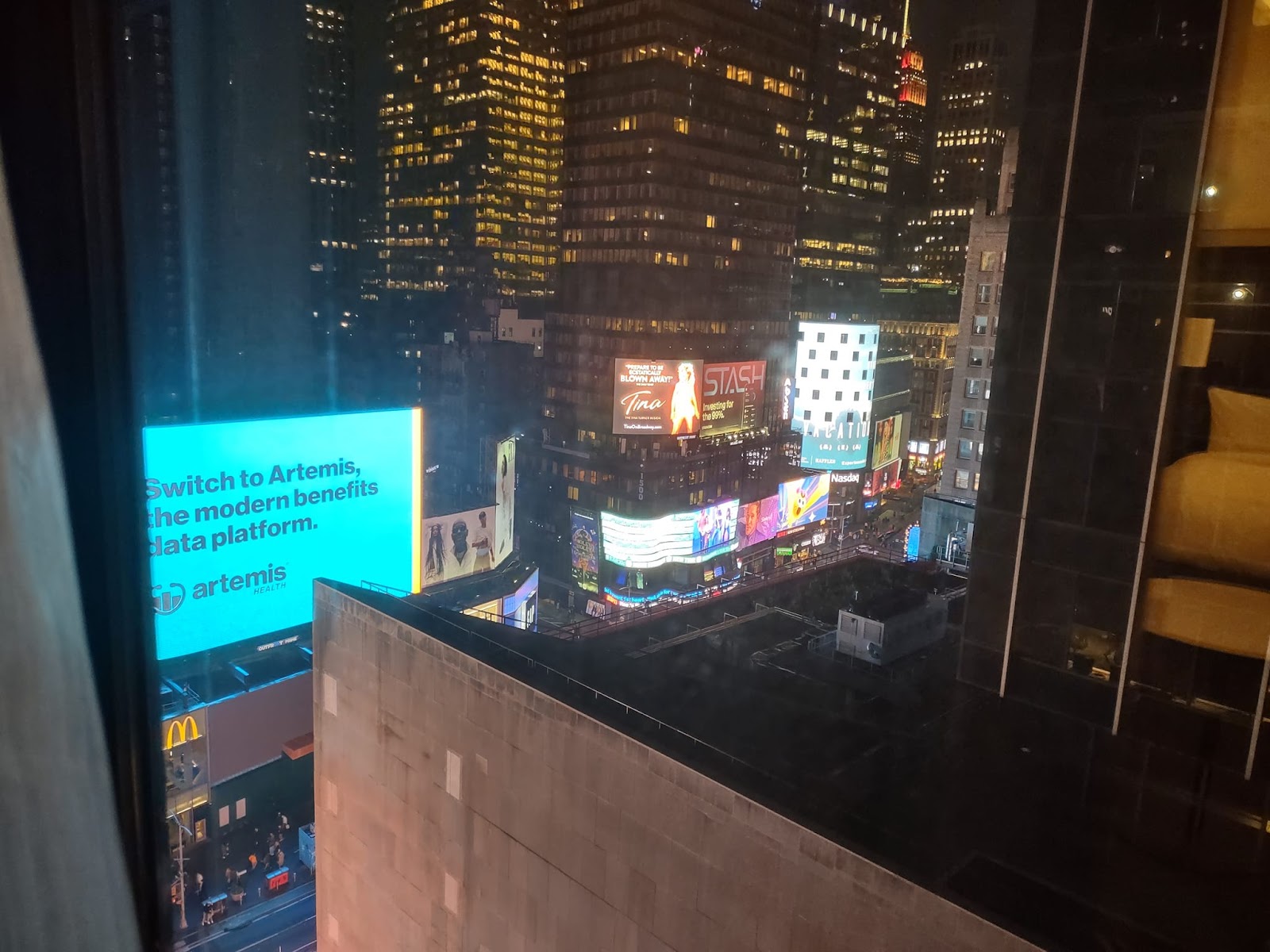
Did I do any writing at all?  In a hotel room, overlooking Times Square?  Fat chance.

But now, I’m glad to be home, where I can write in peace.

Monday, June 30, 2025

Never Hurt a Dog

 by Thomas Kies


My wife has one rule for when I write.  I can kill as many people as I want in any gruesome way my imagination can conjure up. 

“Yes,” she said, “but you can never, ever hurt a dog.”

“But, sweetheart, it’s a wonderful way to show how despicable a villain can be.  Remember the first episode of House of Cards, when Kevin Spacey’s character, Frank Underwood, cradled a dog that he found in the middle of street after it was hit by a car?  We thought he’d comfort the poor pooch until help arrived.  But then, just when you least expected it, he snapped the dog’s neck with cold resolve, without an ounce of regret.  We knew right then and there, he was truly a bad guy.”

“That was disturbing,” she responded, closing her eyes as if trying to erase the memory.

Then I said, “And how about the John Wick series of movies?”

“What about it?”

“They all started when John Wick, content to retire from his life as an assassin, goes on a murderous rampage of vengeance when the son of a mobster kills his dog.  Without that, the entire franchise would never have gotten its start.”

She put her hands on her hips and sneered, “You know I’ve never seen one of those movies.  Much too violent. And now that you told me about the dog, those movies are dead to me.”

Why is it such an emotional no-no in fiction?  I think it’s because dogs represent unconditional loyalty and love.  Canines are dependent on humans and offer simple, pure, and predictable relationships. We think of them as both protectors and furballs that we need to protect. 

I’ve read that on a human scale; dogs have an intelligence level to toddlers.  They love to play, and they cuddle, and they have those sad eyes when they’re begging for a treat. Only the worst kind of villain can hurt a dog. 

This subject came up in discussion a few years ago at a mystery conference in Scottsdale, Arizona where Ian Rankin was the keynote speaker. He had never hurt a dog in any of his wonderful books, but there was one instance where a cat was murdered. 

He chuckled and said in his soft Scottish burr, “I never heard the end of it. People were genuinely pissed. You know I’ll never do that again.”

If anyone is in doubt as to the emotions that can be dredged up, I recall crying my eyes out when I read Old Yeller and then, like a true masochist, saw the movie.  They both end the same way.  Absolutely heartbreaking. 

So, in my mysteries, I’ve hacked up people with a samurai sword, buried them in a shallow grave in the woods, drowned victims by chaining them to the prongs of a giant forklift and dropping them into icy water, shot them, blew them up in fiery explosions, and suffocated them. 

My wife laughs that my imagination is such that she sleeps with one eye open.  But because I will always abide by that one rule, we will continue to stay married.  Never hurt a dog.  

By the way, the pup in the picture above is our girl, Annie.  She’s a sucker for tummy rubs. 

Monday, January 25, 2021

Weird Mail


 By Thomas Kies

This week has been a very good week…mostly.  It’s a new day in America, vaccines are rolling out (although, it’s a rocky road to be sure), and my publisher has told me that there’s good news afoot with the re-release of my first book, RANDOM ROAD.  More to come on that. 

Cool stuff.

The one tiny fly in a big tub of ointment was a letter I received through the mail on Inauguration Day.  While I was watching the new President take the oath of office on my computer, one of my staffers handed me a letter with my name on it. 

I opened it and found a two-page letter in lovely handwriting from someone in Columbus, Ohio.  

The letter read: “I bought your book DARKNESS LANE from a library book sale.  Before reading it I checked out RANDOM ROAD so I could read your series in order.  But as it turns out, I’m not going to read them at all.  I want to tell you why.  It might not matter to you—but maybe you can learn from this or at least become aware of it.”

In essence, the letter writer objected to this passage on the very first page of my first book.  In it, my protagonist, Geneva Chase, a crime journalist, is explaining to the reader a little bit about who she is.  The passage reads, “My name’s been on the byline of hundreds of stories over the last twenty years, in four newspapers, three magazines, a half dozen websites, and, for a very short, shame-filled stint, Fox News.”

The letter writer told me that he/she watches Fox News (along with other media by the way) and voted for President Trump. 

He/she went on to say, “One tiny little action I can take (a peaceful protest if you will) against those who are not my respecting my side is to not read your book.  Those words, “Shame-filled stint at Fox” wounded me.  I get slammed even in a mystery book? I wonder why you felt the need to include a swipe like that. Did you think it sound cool?”

Well, yeah. I know it felt kind of cool when I wrote it.

But you know, I never explained why Geneva was ashamed of her time at Fox.  She was a heavy drinker in those days.  Who knows what she might have done?  And there was a lot of sexual harassment going on in that company in those days.  Or so I’ve read.

The letter writer continued, “Thankfully there are many other books for me to read.  Oh my goodness! I’m starting to feel bad about this.  Like I might be hurting your feelings.  Probably not.  I hope not.”

No, my feelings weren’t hurt.  I’ve been slammed much harder than this. Writers have to have a thick skin. 

The writer went on to say, “The vast majority of Fox watchers are good, smart, interesting, tolerant, freedom loving people.  We are not racists; we are not rubes.  We think for ourselves.  We deserve respect. 

“That’s it.  I’m not including my name etc.  “Our Side” tends to lay low as it can be dangerous to say the wrong thing.”

These are dangerous times we are all living in.  

I try not to get too political when I’m writing a mystery.  But Geneva Chase is a snarky smart-ass.  It’s in her nature to be insulting.  That’s why she’s so much fun to write.   She gets to say things I can’t.

To my letter writer from Columbus, Ohio.  Sorry if you felt insulted.  RANDOM ROAD wasn’t written with that intent in mind. 

Monday, August 26, 2024

Head Hopping


By Thomas Kies

For the last few months, I’ve been mentoring a critique group that meets every Monday night at a local wine bar.  The perfect location for the perfect Cabernet or Malbec and pleasant discussions about writing.

Most of the members of the critique group are holdovers from my last creative writing class. Once the class was over, they surprised me by offering to pay me (real money) to run a critique group.  I declined the cash but instead said that I’d run the group on one condition—that they critique chapters of the book that I was working on at the time. 

They accepted and we’ve been working together and drinking wine ever since.

One of the more heated discussions we entered was initiated by a writer who has self-published four books (a series of mysteries) and is eagerly looking for an agent and a traditional publisher.

When she read chapters from her new work in progress, I mentioned that she “head hopped” and I couldn’t get invested in the characters. 

I had warned them that I would be honest in my critiques of their writing.

Head hopping is when a story or a chapter is being told from a character’s perspective or point of view and then abruptly, it changes, and the story is being told from a different character’s perspective. 

When I mentioned this, she couldn’t believe that she’d done it.  I took her chapter home and physically marked off all the places she changed points of view…sometimes in the same paragraph.

She asked, “Why is that bad?  How else can I tell the reader what the characters are thinking?”

Let’s start with why it’s bad.  For one, it’s distracting as hell.  One of the reasons I was having a problem relating to the characters was that I was never sure who I was supposed to be relating to. When I read a book, I want to be immersed in that world, which means I’m seeing it through the eyes of the characters in that particular scene.  

You can’t do that if you’re flip flopping from character to character, hearing the thoughts of different people from one sentence to the next.

I suggested that the writer show me what someone is thinking.  If Sally is having angry thoughts, demonstrate it.  Have Sally throw a coffee cup across the room, screaming words that would make a sailor blush.

If Charlie is embarrassed, have him blush and turn away, staring at his own shoes.

Head hopping keeps the reader from becoming emotionally invested in a character and, worse yet, is confusing.

So, can you change POVs?  Of course you can.  Especially if you’re writing in omniscient third person POV.  But when you do, you should do it in some kind of scene break or in a new chapter.  Otherwise, it’s jarring and confusing.

So, that was a discussion that lasted over more than one glass of wine. 

Same writer, different discussion was the value of plot over character.  We’ll save that for another blog.  That also was a two-glass discussion.