Showing posts sorted by relevance for query Kies. Sort by date Show all posts

Monday, October 03, 2022

Yes, the Author Was Dead, But the Characters Lived to Tell the Story.


By Cindy Schersching

Full disclosure…Cindy is my wife and she’s written a glowing review of the dinner theater we did a couple of weeks ago.  It was my first attempt at writing for the theater and Cindy’s effusive compliments make me blush.  That being said, here it is, a shameless bit of self-promotion.

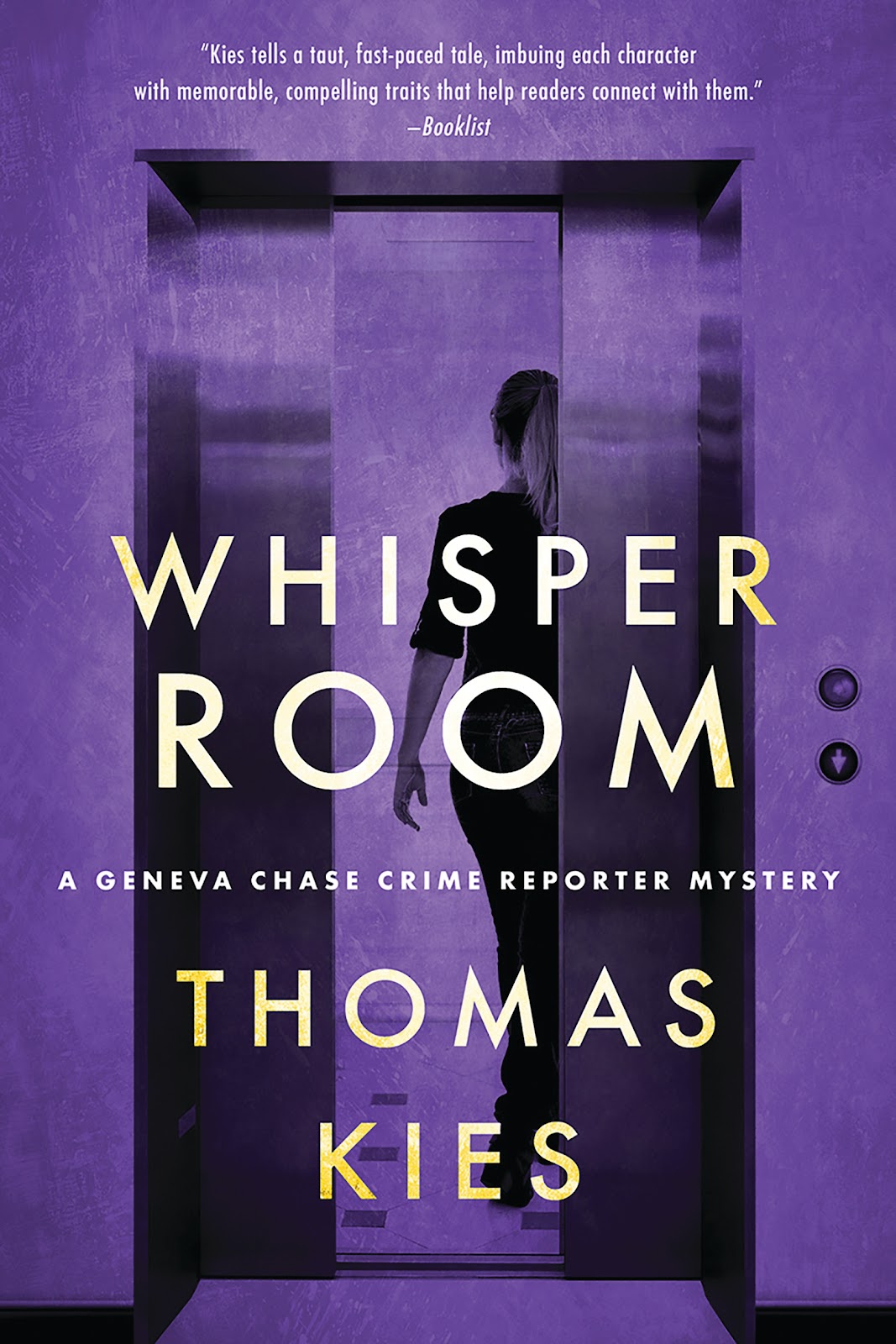
The launch of Thomas Kies’ Whisper Room, his fifth book in the Geneva Chase series, was as masterfully orchestrated as his novel.    Kies took the unique approach of dramatizing the book launch as a play within a play – which he also wrote. Talented community theatre actors brought the books’ characters to life.

The play, Death of an Author, was performed in a dinner theatre format to sold-out audiences of more than 100 guests on each of two evenings.   The performance took place at the newly built culinary school at the county’s community college under the leadership of Shana Olmstead, also the co-owner of Morehead City Floyd’s 1921 premiere restaurant. The 3-course dinner was prepared by the students of the culinary school under the supervision of 2 local Escoffier chefs.   The funds raised from the evenings’ performances went directly to supporting students of the culinary school and to the community theatre’s capital campaign to rebuild the theatre heavily damaged by Hurricane Florence in 2018

The emcee for the evening, Pamela Long, oriented the audience to the Geneva Chase mystery series, while the performers mingled among guests and brought the action tableside.

Each actor was given the freedom to develop their book characters as they adopted them, infusing humor and several surprise interactions.   Robin Hamm, the director, molded the diversity of characters into the murder mystery storyline characteristic of Kies’ novels.

Those familiar with the series also recognized dominatrix Shana Neese (realistically portrayed by Karen Lutz), Frank Mancini and his wife, Evelyn (Ray Tillery and Mylissa Maynard), and Gregor Tolbonov (Eduardo Alen).   Caroline Bell (Mara Jennings ), Geneva Chase’s ward, rounded out the cast.  

Minutes into the performance, it was clear that the author, played by Matt Brooks, had unknowingly ingested cyanide laced wine.   He ‘dies’ on the dining room floor.   Geneva Chase (the well-known protagonist of the Kies crime series played by Kim Murdoch) and Matt Dillon assistant Chief of Police (played by theatre veteran Ken Hamm) unsuccessfully attempted to revive him.  His limp body was slid out on a tarp by Dillon and Private Investigator John Stillwater (David Griffith) while servers with entrée platters swerved out of the way.  Publicist Mandy Chahall (Rhonda Osterhoudt) quickly calmed fears by assuring everyone that even though the author was dead his books would still be for sale -  even though it may be difficult to get them signed.    

Geneva confirms that all in the room are suspect.  It was the responsibility of each to determine ‘who killed the author.’

Kies created a mind-boggling matrix as the characters realized their lives continued even though their creator was dead.   This awareness grows as does the realization their freedom to follow their own dreams.   With motives and motivations for the murder revealed and with fingers pointing in all directions, the audience was challenged to identify the murderer.  Prizes were given to those who first correctly figured out the mystery and for the best sleuth costume.

It was a fun filled evening that benefitted all participants.   Each audience called for a repeat experience at the end of the evening.  Books sales were strong and the real author, Kies, signed each.   


Tuesday, July 24, 2018

Please welcome Thomas Kies!

by Rick Blechta

Type M for Murder has a new member! We are most pleased to welcome Thomas Kies. Tom will begin work next Monday and alternate weeks with our delightful Aline Templeton. Please be sure to visit on Monday, July 30th to read Tom’s inaugural post!

In the meantime, here’s some biographical information he’s provided.

Thomas Kies


Tom Kies has wanted to be a mystery writer since he was a little boy, cutting his teeth on every John D. MacDonald novel he could get his hands on. But real life got in the way – working for newspapers and magazines for 30 years and raising three children. So his dream of being a novelist took a back seat.

Tom’s current day job is as the President of the Carteret County Chamber of Commerce on the beautiful coast of North Carolina. At night and on weekends, he writes about murder. His Geneva Chase series starts with Random Road and six naked bodies found hacked to death on an island. Written from the first person point of view of a female alcoholic reporter, Tom says, “I didn’t start out writing as a woman and, frankly, it’s a challenge. But she’s such a snarky smart ass, she gets to say things I wouldn’t dare and that makes her a hell of a lot of fun.”

His second book in the series, Darkness Lane opens with an abused woman torching her sleeping husband. When the police arrive, she’s drinking wine and watching the firemen vainly attempt to douse the fire. “I’m just toasting my husband,” she says.

Concurrently, a fifteen year-old high school student vanishes. The two plots appear to have nothing to do with each other but as Geneva chases down leads, she finds that they are dangerously related.

Tom’s given workshops for various state writers groups as well as the NC Writers Network Fall Conference. Working on Graveyard Bay, he lives on Bogue Banks, a barrier island with his wife Cindy and Lilly, their shih-tzu.

Tuesday, January 26, 2021

File under: You Can’t Please ’Em All

By Rick Blechta

You’ve just got to read Tom Kies’ post (just below this post). I read that and was laughing out loud — really.


“It takes all kinds,” is all I have to say.


I guess it comes down to people’s self-importance. Tom’s correspondent obviously feels he/she Must Teach Thomas Kies A Lesson. My response would be, “As if I care.” It’s not that I’m a hard-ass. I really do want everyone to enjoy my novels and I do feel bad when someone doesn’t. But…


I learned a long time ago that you have to be willing to take the punches when you put your work out in public. Every author has collected a fair share of bad reviews. I certainly have.


But what gets up my nose is when I’m lectured to. Tom’s correspondent is obviously trying to make a point — a needless point, really — that they are better than him, more understanding and more gracious. He obviously insulted this person greatly, but it was only because they feel self-important. “Let me point out the error of your ways, son…”


I have been on the receiving end of some rather, shall we say, pointed emails over my writing years. With only one exception they were prompted by errors I’d made. Some people are kind when they do this, but some people use this information to try to hurt. The funny thing is, my first response to an error I’ve made is that I’ve let down my readers. Why? Because I could have avoided those errors by doing better research. I should have fact-checked something but didn’t. I do not hesitate to issue a mea culpa in these cases, vow to do better in the future, and always reply. The emails that are obviously meant to be hurtful or prove the correspondent’s superior knowledge I ignore. I figure they’ve got issues that make them do this, so it’s better not to engage.


Years ago now I was doing a signing with Vicki Delany since we both had new books out. One lady came up, looked over my new book


“I think I may have read one of your books before,” she told me. Looking at the back cover, she added, “Yes. I did. I didn’t like it very much. It was a bad book.”


And with that, she walked away.


Why would someone think this was the way to handle this situation?


I guess the (generous) answer is, “It takes all kinds.”


But the juvenile inside of me was tempted to shout out, “Well, at least I’m not an ugly person like you!”

Tuesday, November 22, 2022

Too Dumb for Words

by Charlotte Hinger

Janet Hutchings, the editor of Ellery Queen Mystery Magazine, asked me to create a blog post for their on-line blog. Her guests blog about suspense, short stories and the mystery-fiction scene. I was delighted to have the opportunity. Here's the link to my post: 

The Bliss of Ignorance (by Charlotte Hinger) | SOMETHING IS GOING TO HAPPEN

Last Monday, Thomas Kies, had a great post about how he conducts his writing class. I can't applaud him enough. What a great approach. His classes are kind and helpful. He does his best to help his students achieve their goals. It says the world about the kind of man he is. 

My post was about my lack of writing education when I began my career. I was literally self-taught. Yet, in some ways I was better off because I never heard the discouraging words so many newcomers have to endure.

After a friend of mine read my post she said she wished she had never taken graduate courses in creative writing. That, and a critique group convinced her she had no business ever submitting a thing. She's just now getting her first novel published after picking herself up years later and working up the courage to try again.  

Another friend told me her writing classes leached all creativity from her years ago. She will never write now. 

This just burns me up! What in the world is going on? I didn't have access to either liberal arts colleges or writing groups in the little Western Kansas prairie town I lived in. I learned all the publication processes from books and magazines. What a luxury to learn without pressure. 

I attended my first writing group as a guest of a friend in another state. I had just finished Come Spring, a historical novel, which was later published by Simon and Schuster. I was in awe of the cultured well-dressed attendees. Yet, by the evening's end, I decided it was the meanest group of women I had ever come across. They absolutely slaughtered the work of the only one there who was writing a novel.

How could that poor timid little soul take that week after week? That's the real story of what soured me toward writing groups. I was glad I didn't have any part of my manuscript with me. I would have been expected to read it and probably would never have submitted my work after the group "helped me."

Again, what in the world is going on?

 I can't abide cruelty in any form. It's especially egregious when it comes to creativity. It doesn't take much to blow the flame out of candles. 

Three cheers for Thomas Kies. If you haven't read his post, do so. It a model example of the right way to teach a difficult subject.

Monday, March 23, 2026

Scams, Scams, and More Scams


 by Thomas Kies

I recently received these unsolicited emails. 

Hello Thomas,

I’m reaching out on behalf of The Great Books Society of Denver, a lively community of 680 readers who meet monthly in Englewood, Colorado.

Your work, Random Road, came up in one of our recent discussions, and in true book-lover fashion, we thought: why not go straight to the source? The gritty realism, layered mystery, and complex humanity in your novel resonated deeply with our members. We would love to feature your book as our monthly pick, giving it exposure to an engaged, thoughtful audience who are genuinely excited to read and discuss new works.

Featuring your book with us provides direct engagement with a dedicated community of readers who love to discuss and recommend books, increased visibility among literary enthusiasts who value discovery and thoughtful conversation, and the opportunity for your work to become a memorable part of a month-long reading experience.

If this sounds like your cup of tea (or glass of wine, we don’t judge), please let us know, and we’ll share the next steps to make it happen.

Warm regards,

Organizer | The Great Books Society of Denver

So many compliments. By the way, in a follow-up email, they listed a tiered list of prices for their services. This wouldn’t be a scam, would it?

Hello Thomas Kies

Your book Darkness Lane was recently highlighted by one of our club members. Would you let us know if it’s available for our 7 Day Read Along and upcoming Club Literary Prize?

Organizer, Vienna English Club

Author scams are rampant.  It was a topic of multiple discussions in San Francisco a few weeks ago while I was there attending Left Coast Crime. 

Dan Berry recently wrote a column for the New York Times Book Review talking about scams.  He said that one scammer had reached out to him claiming to be Margeret Atwood (full disclosure, I got one of those too).  Berry contacted Atwood’s agent who wrote back saying, “Oh, this is so terrible and mean. Preying upon people’s hunger for success and/or their hope to improve their writing.”

What are some of the most common author scams these days?

Fake Literary Agents/Publishers: Scammers pose as legit agents, offering publishing contracts in exchange for upfront "reading" or "editing" fees. 

Marketing and PR Scams: Companies promise Hollywood film adaptations, Netflix pitching, or massive marketing campaigns, often targeting indie authors. 

Vanity Presses: These houses demand high fees to publish, promising success but providing little to no real editing or distribution. 

Paid Review Scams: Offers to purchase "guaranteed" reviews on sites like Amazon or Goodreads, according to The Darling Axe.

Impersonation Scams: Scammers use AI and LinkedIn/social media to impersonate well-known publishing professionals, often using using well-known, bestselling authors. 

Award/Contest Scams: Fraudulent literary awards that charge hefty entry fees

Why are these SOBs targeting writers?  Dan Berry summed it up by saying, “…the victim’s vulnerability. A lonely heart yearns for love and companionship: an author yearns for sales and validation. 

Yes, I know this is the second time I’ve published a blog about scams.  I apologize.  It’s just that I know there are people being cheated and it really cheeses me off.   www.thomaskiesauthor.com 


Saturday, July 07, 2018

Thomas Kies, Guest Author


Type M is very pleased to welcome guest author Thomas Kies, author of the Geneva Chase Mystery Series. The first novel in his new series, RANDOM ROAD, introduced Geneva Chase, “a reporter with a compelling voice, a damaged woman who recounts her own bittersweet story as she hunts down clues” to murders straight out of a nightmare—six bodies found naked and cut to ribbons in a posh Connecticut home. Thomas lives and writes on a barrier island on the coast of North Carolina with his wife, Cindy, and Lilly, their Shih-Tzu. He has a long career working for newspapers and magazines, primarily in New England and New York, and is currently working on his next novel, GRAVEYARD BAY.
___________________

How Crazy is Your Research?


From nine until five, Monday through Friday, I’m the President of the Carteret County Chamber of Commerce. We’re right on coast of North Carolina and we’re blessed with beautiful beaches, world class cuisine, and some of the best fishing you’ll ever see. I’m the head cheerleader for one of the nicest places on earth.

Being the head of the Chamber of Commerce comes with a reputation that’s wholesome, upright, and good for the community. Heck, when the sun’s shining, it’s called Chamber of Commerce weather. Who else has their own damned weather?

But on weekends and after work, I think about and write things that are dark and, according to my wife, deeply disturbed. I write mysteries.

That requires certain tidbits of knowledge that others may not have, and certainly nothing that a president of a chamber of commerce should be harboring. For example, in my first mystery, RANDOM ROAD, a swingers’ club figures prominently in the plotline. I’ve lost track of the number of people who’ve read the book and asked me how I know what the inside of one of those clubs looks like. Because I worked in newspapers and magazines for over thirty years, I have the inside dope on a lot of stuff. It doesn’t mean I was a member.


In my second book, DARKNESS LANE, there’s a creepy scene that takes place in an exclusive diamond merchant’s shop. It’s expensive, well-secured, hard to find, and by-appointment only. Yes, that’s based on a real jeweler’s establishment. Full disclosure, in real life, the owner was murdered there.

The theater and haunted mansion scenes in DARKNESS LANE? Based on real locations in Fairfield County, Connecticut where the book takes place. I have pictures on my phone. I can share if you like.

 In the book I’m writing now, GRAVEYARD BAY, there’s a scene from a professional dominatrix’s BDSM dungeon. Have I actually seen one? Oh, yes. Was I a client? Hell, no.

But then there’s the stuff I don’t know or haven’t seen.

Let me digress for a moment. When I attended my first Mystery Writers Conference, there were multiple workshops given by authors, publishers, agents, cops, ex-FBI agents, forensic specialists, and physicians. We discussed everything from how to kill someone, to hiding the body, to what the body would look like after being in the water for a week. Questions were asked and answered. Will someone die after eating ground glass? What is a fatal dosage of Fentanyl? When someone is killed and thrown into the water, how do you keep them from floating to the surface?

If you were someone off the street just wandering into one of those workshops, you’d think you’d stumbled onto a coven of psychopaths. Weird? Certainly. Scary? Maybe. Fun? It is if you’re a mystery aficionado.


So, doing research at home is very similar. If someone were to look at my browsing history on my computer (my home laptop, not my work computer…oh, no—that would be wrong), they’d be tempted to call Homeland Security or the FBI. Let’s take a look at some of the topics I’ve Googled or YouTubed: The Russian Mafia, Los Zetas, M-13, explosives, pill mills, AK rifles, handcuffs, sex trafficking, ice pick murders, samurai sword, killer clowns, theater make-up techniques, Aryan Brotherhood, and hypothermia.

Some of the headlines of articles I’ve downloaded: Garage owner charged with selling drugs. Prominent developer killed by train. Real estate agent charged with home burglary. Florida nanny found dead in woods reportedly tortured before her murder. Body found in floating barrel identified, but name is withheld. Students mine data to find where unfaithful husbands live.


Those are actual headlines!

So, speaking of data mining, you can only imagine what Facebook has on me. And the ads that pop up unbidden on my computer screen? There’s an algorithm working overtime that’s dropping the weirdest advertising possible in my emails and on my newsfeed.

But then there’s the old fashion way of doing your research. This is where you get a feel for a scene or the flavor of the action. Talk to the experts. I have friends in law enforcement that help keep me on track (what happens when someone goes missing?). Some of them are avid readers so I want to get it right. There are doctors (so what does that broken arm look like?) and attorneys (walk me through a plea deal) in my Rotary Club who are fans as well. They don’t mind that I ask them questions, even if their answers never make it into a novel.

I’ve also spent time in police headquarters, hospitals, prison (not much time), and courtrooms. It gives you a chance to see, listen, feel, and smell the scene. I love researching my books.

And while knowing your subject matter is a good thing, Stephen King writes, “You may be entranced with what you’re learning about the flesh-eating bacteria, the sewer system of New York, or the I.Q. of potential collie puts, but your readers are probably going to care a lot more about your characters and your story.”

I try to tell the best story I can, but I also try to make it as realistic as possible. I research some pretty strange stuff…just don’t tell my Chamber of Commerce board of directors.

COMING JUNE 2018! The second book in the Geneva Chase series, DARKNESS LANE, is coming in June 2018! Pre-order now to be the first to read Geneva Chase's latest account.

Visit Tom's website at www.thomaskiesauthor.com

Monday, February 22, 2021

Ink In Her Veins


 By Thomas Kies

The headline in my county’s Sunday newspaper is “Nothing to See Here”, referring to the efforts of local politicians to get a bill passed eliminating the requirement to post public notices in the paper.  They would like, instead, to post them on the county website.  

Yet another attack on newspapers. 

The protagonist in my Geneva Chase Mystery series is a crime reporter for a small independent newspaper that’s on the brink of being purchased by a media conglomerate.  Geneva is based on several women I’ve worked with over the years when I too worked in the newspaper and publishing business.  

It’s a business that I loved.  I did everything, including working as a pressman on a Goss web press in Detroit, becoming a staff writer, eventually becoming an editor, then moving into advertising management, and ultimately becoming the publisher and general manager of a magazine publishing house here on the coast of North Carolina. 

 I even delivered newspapers during a blizzard in one of the company’s ancient, rear-wheel drive vans.   Yikes.

The business was exciting, interesting, and fun, but filled with the pressures of working on a deadline.  

Unfortunately, the business has changed.  The combination of the Great Recession, the effects of the Internet, and Covid-19 has been disastrous for newspapers.  Their main source of revenue is advertising and all three of the factors I presented have shrunk that revenue stream.  

Before the Great Recession, the housing market was booming.  Real estate companies were spending a fortune in the classified section of newspapers, along with car dealerships, and companies looking to hire employees.  

Starting in 2007-2008, the housing bubble burst followed by cascading disasters in employment and consumer confidence.  Companies who always knew about the Internet, suddenly found it very attractive.  It was cheap and easy to use.  

The lucrative classified pages in newspapers diminished to a disastrous level. The advertising in the main pages of the paper also either got smaller or went away altogether. 

According to a New York Times article in December of 2019, over the past 15 years, more than one in five papers in the United States has shuttered, and the number of journalists working for newspapers has been cut in half, according to research by the University of North Carolina’s School of Media and Journalism. That has led to the rise of hollowed-out “ghost papers” and communities across the country without any local paper. “Ghost papers” are publications what have severely cut the staff in their newsrooms making any kind of investigative reporting non-existent. 

Covid-19 has delivered even more pain to newspapers.  When the world shut down in March of 2020, stores, shops, bars, and restaurants all closed their doors for months. Advertising became even scarcer.  Even with the world starting to open back up, the number of pages in your local newspaper has become less and less.  

An unexpected circumstance from the experience of working from home, more newspaper companies are closing their newsrooms, having offsite printing companies produce their publications, and selling their buildings and assets.

A huge part of the joy of working for a newspaper was being with the people you worked with.  Yes, the pressure of daily deadlines could lead to fraying nerves and in-office tension.  But at the end of the day, these people were your “newspaper family”.  Even though I’ve been out of the business for more than ten years, I still stay in close touch with a lot of them even if it’s through social media on the Internet.

Speaking of the Internet, the way people get their news has changed dramatically.

The transition of news from print, television and radio to digital spaces has caused huge disruptions in the traditional news industry, especially the print news industry. It’s also reflected in the ways individual Americans say they are getting their news. A large majority of Americans get news at least sometimes from digital devices, according to a Pew Research Center survey conducted Aug. 31-Sept. 7, 2020.

More than eight-in-ten U.S. adults (86%) say they get news from a smartphone, computer or tablet “often” or “sometimes,” including 60% who say they do so often. This is higher than the portion who get news from television, though 68% get news from TV at least sometimes and 40% do so often. Americans turn to radio and print publications for news far less frequently, with half saying they turn to radio at least sometimes (16% do so often) and about a third (32%) saying the same of print (10% get news from print publications often).

The point of this rambling blog is that even in fiction, I’m transitioning Geneva Chase, crime reporter, into going freelance, working gigs for her newspaper on occasion, and working for a company called Lodestar Analytics that does open-source research as well as instigating deep dive investigations.  

Personally, I still like newspapers.  I get the paper out of Raleigh every day (even they’ve stopped printing on Saturdays, however) and my local newspaper (which has cut back from three days a week to two), as well as the Sunday New York Times (which seems to be flourishing).

I also subscribe to a digital Washington Post feed and routinely scan other websites (all free) for news from around the globe. I’m a news junkie and the Internet feeds my addiction. 

Still, I’m happiest when I’m writing scenes where Geneva Chase is working in the newsroom.  She’s got ink in her veins. I’d like to think that I do too.

Monday, January 10, 2022

Dystopian News and Focusing on Writing


 By Thomas Kies

I’m an unabashed news junkie.  My career for over thirty years was in newspapers and magazines so being a news geek just comes naturally.  I love the physical feel of a newspaper and we get our local paper delivered here twice a week (we really don’t have enough going on here for more editions than that), the News and Observer out of Raleigh every day except for Saturday, and the Sunday New York Times.  Additionally, I subscribe to the online versions of the Washington Post and my old newspaper, the Norwalk Hour. 

Put that together with all of the other free news websites available and I’m down a rabbit hole instead of writing. 

It is so darned easy to get distracted.  Just in a single Op-Ed section of a Sunday New York Times, there were pieces about how different countries were being affected by climate change, how the new covid variant was raging through the country, and how the divisive nature of our political and cultural landscape is slowly leading up to more violence and the possible end of our democracy.

If those aren’t the ingredients for a dystopian novel, I don’t know what is.  How on earth can anyone concentrate on writing a mystery with so many crazy things happening all at once?

I do a number of things to give myself direction.  I’m very lucky that I live on a barrier island here on the coast of North Carolina, so when I want to clear my head, I’ll take a ten-minute walk to the beach.  Usually, by the time I’ve gotten back home, I can sit down and hit the keyboard.

If I get stalled, I’ll bribe myself.  I’m a coffee addict so before I top off my latest cup of caffeine, I’ll force myself to write at least another couple of paragraphs. 

If I get frustrated with my progress, I’ll get up from my desk and wander around the house, thinking of dialogue.  Sometimes I use it, sometimes I don’t. But it gets the creative juices flowing.

Here’s a question.  Do all writers hear voices in their heads?

For me, starting a new book is the absolute hardest because you’re creating a new plotline, new characters, and new locations.  Everything is being made up of whole cloth. 

Right now, I’m about eighty pages into my new project and yesterday, I went back to the first few chapters to smooth out the rough edges and polish the prose. That was fun!  This afternoon I’ll do another few chapters.

Hopefully, by the time I get back to where I left off, I’ll have hit that place when the story starts to write itself.  It’s where the characters take on a life of their own and you know where the book is going.

Right now, however, I don’t even know who the bad guy is.  Bu that really is part of the fun, isn’t it?

Monday, March 07, 2022

The Last Class

 By Thomas Kies

Tonight will be the last class in my Creative Writing workshop series at the college.  The last class is always a little bittersweet, although many of the participants sign up for my Advanced class starting in three weeks, so I’ll get the chance to work with them again.

This time around, there were seven people in the group.  Starting out, no one knows anything about each other. By the end of six weeks, they’re all friends, supporting each other in their writing, and sometimes their lives. 

Every week, I give them a writing prompt and the following week they read it in front of the class.  Now, I know how scary that is.  I’ve been reading my own work in front of groups for years, and I still get the heebie-jeebies. To make it easier on them and a positive experience, after the students read the piece they’ve written, the class applauds, and we go around the room talking about what we liked about what they’ve written and what might make it stronger.

One week, I asked them to write a kick-ass protagonist.  Another week, I asked them to write an extremely emotional scene.  Throughout the workshop, it’s clear that in some cases, they’re writing as wish fulfillment (think: James Bond-style spy thriller) and in some cases it’s therapy (think: suicide, PTSD, or spousal abuse). 

Whatever they write, it’s clearly personal.  And I think that’s what all writing is about.  We’re making stuff up, sure, but to some degree, what we’re putting down on paper is a piece of ourselves. 

Which is why we get nervous when we read it in front of a group of people. 

For my last class tonight, the assignment is to write the last three or four pages of your book.  Whatever that means to you.  

Some of the students have managed to keep the thread of a cogent story going using every one of my exercise prompts.  So, most likely, we’ll hear the last few pages of the book they have in their head.

When they go home, they will have written the first and last chapters of their first book.  Now all they have to do is fill in the middle.

Of course, that’s the trick, isn’t it?

In some cases, the last few pages of their book represent closure to something that they have written about that’s deeply personal to them. There will be resolution. 

This is the sixth time I’ve taught this workshop, and thankfully, the resolutions I’ve heard have always been positive. 

So, I look forward to tonight’s class and see how the friendships that have formed play out after the workshops have ended.  Some of my students have gone on to create writing/critique groups and continue to meet.  Two of my students have gone on to write books and one has had one published. 

That’s my reward. 

Monday, January 24, 2022

Ice, Titles, and Edgars

By Thomas Kies

I’m writing this in my home office, gazing out my second-floor window over the garage, with two pairs of socks on my feet, wearing jeans, a sweatshirt and denim shirt over that.  There’s ice covering the trees in our yard, and I can feel the cold radiating from the floor.  The garage, after all, is not insulated. 

We were hit with an ice storm last night.  Rare for this part of the country.  It was bad enough that the weight of the ice brought down a huge oak tree on top of our neighbors’ house.  One of the limbs came right through the ceiling of their bedroom.  Luckily, no one was injured.

According to the social media platforms, where I can spend way too much time, there were multiple power outages around our county, but they are all in the process of being restored. All in all, things could have been much worse.

In much of the country, it is.  Bitter cold, blowing snow, impassable roads all make life miserable, particularly in some of the mid-western and northern states.  Before moving to North Carolina, my wife and I lived in Connecticut.  Both of us could weather our winters pretty well. But since moving south of the Mason-Dixon Line, we’ve lost all capacity to withstand the cold. 

So, today I’m preparing for my Creative Writing class that begins again in a week. I'm also drafting a synopsis for my next book that I’m working on. I'm anxious to get it to my editor along with the early chapters. 

Like some of my brother and sister bloggers, I’m struggling with the title.  Usually, I have one in my head before I even type out the first line. Not this time.

I’ve put myself in a box as far as my Geneva Chase mysteries go.  The titles of the first four books have been place names: Random Road, Darkness Lane, Graveyard Bay, and Shadow Hill.  My fifth book will be out in August, and it’s called Whisper Room.

Are you seeing a pattern? The first word has been a descriptor with two syllables and the second word is the place with just one syllable. I know it’s kind of silly to make myself hold to that, but the pattern has been lucky for me. 

And yes, I’m kind of superstitious. 

Every one of my books has been saved on the same thumb drive. Would it be bad luck to use a different thumb drive?  I don’t know and I don’t want to find out.

So, book number six has no official name yet but I’m about eighty pages into it and casting about for a two-word title that fits the pattern.  Something like Murder Street or Poison Pit or Viper House. And, no, I’m not using any of those. 

As I look out my window, the only title popping into my mind is Icy Mess.

Totally unrelated, I got news on Thursday that my fourth book, Shadow Hill, has been Edgar nominated by the Mystery Writers of America for the G.P Putnam’s Sons Sue Grafton Memorial Award.  The award honors work that has the hallmarks of Sue’s writing as well as those of her most famous character, Detective Kinsey Millhone: "a woman with quirks but also with a sense of herself, with empathy but also with savvy, intelligence, and wit."

I hope that Geneva Chase fits the bill.

I’ve never been nominated for any sort of literary award before and I’m deeply honored, especially for this one.  I’ve been a huge fan of Sue Grafton’s work and I’m proud to say that my books have been favorably compared to hers. 

I can think of no higher honor than that.

Monday, September 22, 2025

Seeing Characters Come to Life

 by Thomas Kies

On October 14 and 15, actors from the Carteret Community Theatre will be performing MURDER ON THE MENU at the Culinary School at Carteret Community College.  Along with a stellar performance, there will be a brilliant three course dinner, a singer, and a multimedia mystery.  

The time, 1953.  The place, Paris, France.  The precise venue, Chez Beaujolais-the first American owned restaurant in Paris post-World War II. 

The Korean War has just ended but the Cold War rages on.  The guests for opening night at Chez Beaujolais:  Sally Willis, the first female US Ambassador to France.  Senator Winston Palmetto from the great state of North Carolina.  Captain Vladimer Smirnov, Soviet Ambassador to France and nephew of Nikita Khruschev


.

The two special guests are Dr. Cassandra Hawking, eminent US physicist, instrumental in the design of the first nuclear submarine, the Nautilus.  Sitting next to her is her love-stricken suitor, Elliot Chesson-Fitzpatrick, of the Boston Chesson-Fitzpatrick’s.

Okay, not only did I write this, but they were an actor short and now I’m playing the Russian ambassador.  My accent is driving my wife crazy. 

This is the third murder mystery dinner I’ve written for our local theater and the culinary school.  I have a blast because I love the theater…and food…and having my characters take on a life of their own.

Unless you get a movie or television deal, how often do you get to see your story unfold before your very eyes?  Hear your characters say your dialogue?  

And more importantly, I get to watch the audience.  I love it when they laugh at the jokes and work to try to solve the crime at the end of the evening.  How many people at those tables got it right? 

Sure, I can put playwright on my resume now, but I’m still learning the craft.  The very first year, at the end of the first act, I had to contend with a dead body in the middle of the dining room.  It’s just not fun trying to serve dinner around a corpse.

Kind of a distraction.  And not easy for the poor actor portraying the stiff. 

This year, I’m trying something a little different.  Sure, there’s a murder, but it happens long distance.  There’s no body to worry about.  But what is truly different, we have a main character that’s been poisoned, and we must find who the culprit is and get the antidote in thirty minutes, or the character will die.

There will be a ticking clock on the wall. The audience will be able to see how much time is left while watching the plot unfold before them.  

So, it’s a fundraiser for the culinary school at the college and for the community theater.  I may sell a few books at the event, but more importantly, I have an absolute blast. 

Monday, June 17, 2024

Is Coffee a Necessity for Creative Writing?

 By Thomas Kies


I’m hard at work on a new book (almost 240 pages into it) and I’m really excited with it.  It’s dark but not terribly violent and the protagonist, while professing his decency, makes decisions that could be considered borderline illicit. 

But what I’ve discovered is that the characters are drinking a hell of a lot of coffee.  So, I’m wondering, is it because I drink a hell of a lot of coffee? Admittedly, I feel the need for a hot cup on the table next to me as I write. I like the taste of it.  I enjoy the feel of the warmth of the cup in my hands…even on a hot day.  And yes, I like the addictive kick it gives me. 

My wife recently drove to Tupelo, Mississippi, to meet with her brother.  He lives in Texas and Tupelo is dead center between where we live and where he lives.  Tupelo also happens to be the birthplace of Elvis Presley.  So, Cindy, knowing I’m a coffee geek, brought me home something I don’t have—a coffee mug emblazoned with an image of the king with a tiny guitar serving as the handle.  


I began to wonder if other writers are coffee geeks.  I’ve read that a lot of writers work on their craft in coffee shops (something I’ve never been able to master---too many distractions).  But do they actually need the caffeine to be creative?  I found a few quotes that seem to confirm, coffee has its place in literary society.

"Where do you get inspiration for your books? I tell myself I can’t have another cup of coffee till I thought of an idea." — Douglas Adams 

"It is inhumane, in my opinion, to force people who have a genuine medical need for coffee to wait in line behind people who apparently view it as some kind of recreational activity. I bet this kind of thing does not happen to heroin addicts." — Dave Barry 

"I could settle down into a state of equable low spirits, and resign myself to coffee." — Charles Dickens. 

 "Reading in bed can be heaven, assuming you can get just the right amount of light on the page and aren't prone to spilling your coffee or cognac on the sheets." — Stephen King. 

"Even bad coffee is better than no coffee at all." — David Lynch. 

"Don’t look at me in that tone of voice." — Dorothy Parker (on having to interact with people before she's had coffee).  

"I believe humans get a lot done, not because we’re smart, but because we have thumbs so we can make coffee." — Flash Rosenberg. 

"Coffee is a lot more than just a drink. It’s something happening. Not as in hip, but like an event, a place to be, but not like a location, but like somewhere within yourself. It gives you time, but not actual hours or minutes, but a chance to be, like be yourself." — Gertrude Stein.

"The best maxim I know in this life is, to drink your coffee when you can, and when you cannot, to be easy without it." — Jonathan Swift. 


So, get yourself a cup of your favorite brew, sit down in front of your laptop, and continue writing. 

Monday, April 18, 2022

Cozy? Me? I thought I was Hard-Boiled!


 By Thomas Kies

The ARC for WHISPER ROOM (release date, August 2) is available now for review and a few people have already commented on Goodreads.  I’m more than pleased that universally, so far, their reviews have been exceptionally positive.  I’m a bit taken aback, however, that two of them describe my book as a Cozy Mystery. 

I’m far from insulted, but I’ve never considered my books to be cozy by any stretch of the imagination. They’ve always been described as dark, twisty, and scary.  My neighbor read my third book, GRAVEYARD BAY, and when I asked him how he liked it, he told me, “The ending gave me nightmares.”

No cozy there.

The cozy mystery is a subgenre that has been described many ways, but I’ll try to distill it down as best I can.  The protagonist is usually female, an amateur sleuth, and the violence and sexual activity takes place off scene.  The setting is generally a small community where most people know each other

Interestingly, that kind of describes WHISPER ROOM. If you close your eyes and squint at it from a distance. 

Merriam-Webster defines genre as “…characterized by a particular style, form, or content.”

Primary fiction genres are: Romance, mystery, science fiction/fantasy, action/adventure, thriller/suspense, horror, historical fiction, and young adult.

Then there are subgenres. Amazon numbers them as 16,000 and calls them categories. 

Subgenres for fiction are: psychological thriller, cozy mysteries, historical mysteries, romantic suspense, spy thrillers, police procedural, private detective, legal thrillers, heist, locked room, noir, and supernatural thrillers.

Now, many of the subgenres for mysteries are obviously hybrids from the broad definition of genres listed above. 

My first book, RANDOM ROAD, was labelled a mystery but in reality, it was a romance novel with a mystery as the engine that drove the story forward. Girl gets boy, girl loses boy, girl gets boy, girl solves mystery, boy dies.  So, let’s add the genre of Tragedy to our list. 

How did Amazon label RANDOM ROAD? Hard-boiled mystery, amateur sleuth, women sleuths.  Nothing about romance at all.  I guess I hid it well.

I’ve taken a hiatus from teaching my Creative Writing courses at the college until this coming fall, but I think one of the exercises I’ll try is asking the students to take a book they’ve recently read, as well as a classic they may have read when they were in school and give it three classifications like Amazon might.

Like TO KILL A MOCKINGBIRD.  Would it be a Legal Thriller, a Coming-of-Age novel, or maybe Horror (Boo Radley was pretty scary…until he wasn’t)? 

Amazon actually classifies the novel as Teen & Young Adult Classic Literature, TV/Movie & Game Tie-In Fiction, and Classic American Literature.

I’ve never even heard of TV/Movie & Game Tie-In Fiction.

So, back to WHISPER ROOM.  The blurb reads: Sex, Blackmail, and Murder…Welcome to the Whisper Room.

Doesn’t sound cozy at all to me. 

Monday, April 07, 2025

Big Conference vs. Small Conference


By Thomas Kies

I confess, I’m signed up to go to Bouchercon in New Orleans in September.  After attending the one in San Diego two years ago, and then again in Nashville last year, I was reluctant to commit to going to another.  It’s not that they don’t do a good job.  They work hard at making Bouchercon a good experience for everyone involved.

That’s part of the problem, however.  There are so damned many people there.  I think there were over 1,500 participants in Nashville last year.

Yes, I love seeing old friends again, and yes, I love making new friends.  But honestly, I feel lost in the shuffle. 

In March I attended the Suffolk Authors’ Festival presented by the Suffolk Virginia Tourism Bureau.  They limit the event to about 50 writers across different genres.  The one-day event was attended by about 550 readers, many of whom bought our books. 

I had a chance to interact with almost all the other authors and spend a lot of time with attendees.  Because it was so small, the folks who put it together spent a lot of time and effort to make sure we were all happy. 

That includes coffee and snacks in the morning, lunch, and then a really nice dinner, exclusively for the authors along with an open bar.  Anytime you have an open bar for authors, you’re making friends. 

That final evening, I spent drinking wine and talking with the likes of John DeDakis, John Gilstrap, K.L. Murphy, Jeffrey Higgins, and Bill Rapp.  Earlier in the day, I was on a crime panel with Maya Corrigan, Esme Addison, Jenna Harte, and Carrie Ann Knox, none of whom I’d ever met before, but were delightful.

The cool thing about the panels at the Suffolk Festival was there was only one panel at a time.  The room was filled with attendees.

 Don’t get me wrong, if I didn’t enjoy going to Bouchercon or Thrillerfest, I wouldn’t spend the money.  And those events, after the airfare, hotel, food, and bar tab, are pricey.  My publisher, Poisoned Pen Press/Sourcebooks, has always put together a wonderful book signing at Bouchercon.  The event organizers do their best to put as many authors on panels as humanly possible. 

The dilemma with so many panels is that there are multiple panels going on all the time. Some are very well attended…and some aren’t.

There are so many attendees that if you’re not an extravert, you’re going to get lost in the crowd.  And let’s face it, an awful lot of authors are introverts.  At the bigger events, you’ll have a better chance to meet editors and agents than at the smaller venues, but sometimes, it’s at an additional cost.  

The point of this piece?  Don’t overlook the smaller events.  The big ones are good, for sure, but it’s easy to feel lost in the crowd.

Monday, June 13, 2022

Younger Readers Discover Agatha Christie


 By Thomas Kies


A little a week ago, I attended Thrillerfest in New York.  It was my first in-person conference since 2019 and I loved it.  The organizers of the conference did a terrific job even though it was at a different venue than it’s been in the past.  The Sheraton Times Square is a wonderful facility, but it took me a couple of days to figure out the configuration of the conference area.  

Because of Covid, it appeared that attendance was down, and I noticed that a couple of the panels were missing some of the participants.  Toward the end of the conference, there was a panel on News and Investigations.  Three participants were missing leaving only two authors and the facilitator.  In an interesting quirk of fate, John DeKakis, formerly a CNN writer for Wolf Blitzer, and I were drafted to sit on the panel.

Yes, I had my own panel the day before.  This was just extra and something fun.

But even with the threat of an uptick in Covid, there were hundreds of attendees including authors, publishers, agents, and most importantly, readers and fans. Everyone seemed to be enjoying themselves.

In Friday’s Wall Street Journal, there was in an interesting article entitled “Young People Discover a Hot New Writer—Agatha Christie.” It talked about how a young generation has “discovered” Christie.  Indeed, scrolling through TikTok, videos labeled #AgathaChristie have clocked in at 26 million views. 

Sales of Agatha Christie books in the US have risen 39% in the first quarter from last year’s period according to book tracker NPD BookScan. 

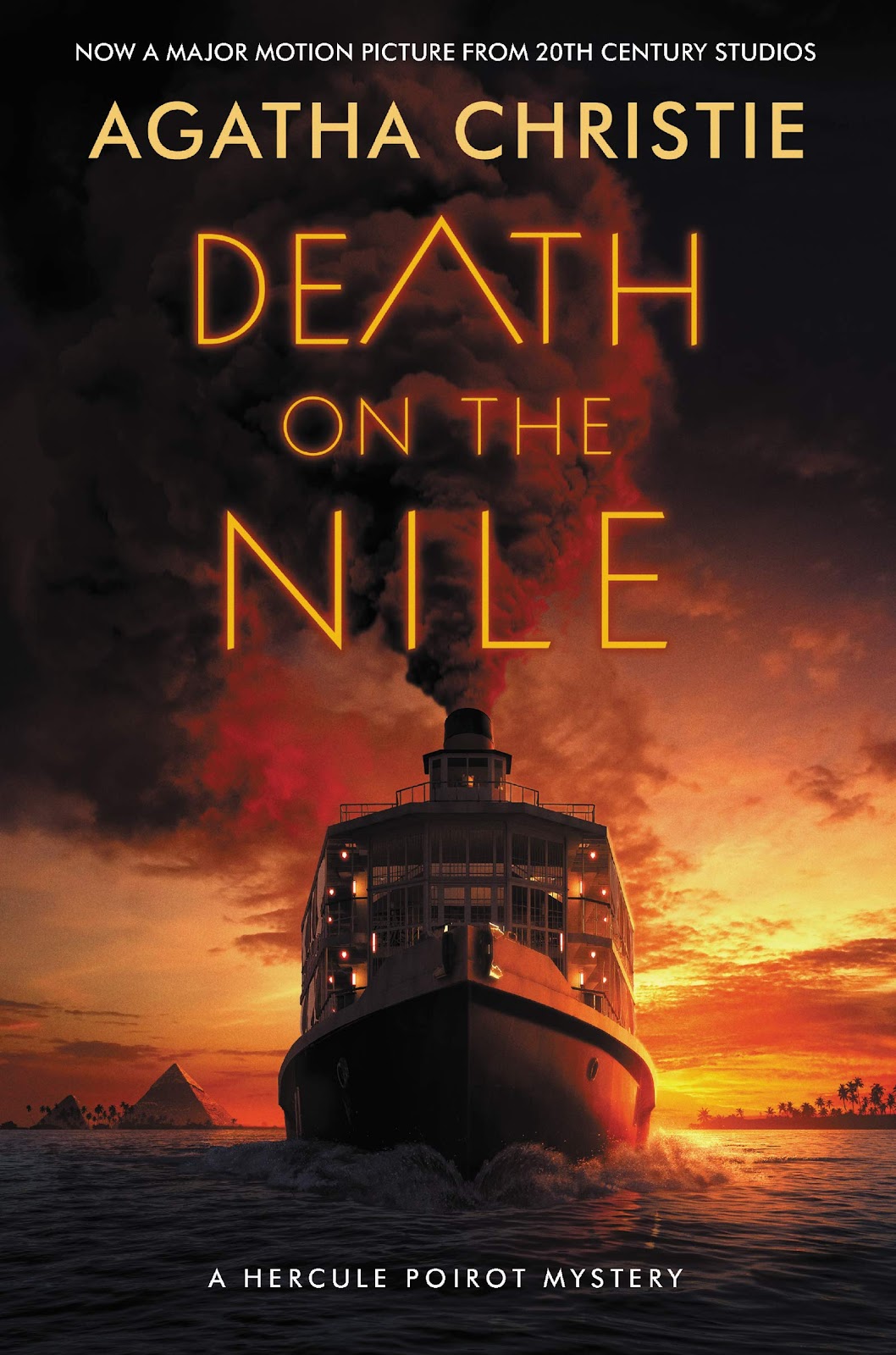
Part of the reason may be the popularity of the 2017 movie “Murder on the Orient Express” that featured Kenneth Branagh as Hercule Poirot.  Then there was another spike in popularity when the 2022 movie “Death on the Nile” arrived.  

Indeed, at ThrillerFest, it appeared there was an increase in interest in mysteries and thrillers from those who are under 40, both readers and writers. I have no hard evidence of that.  Only my observations in the panel rooms, the cocktail parties, and at the hotel bar.  You know…the typical mystery writer hangouts.

So, let’s go to the basics.  Why do people like mysteries and thrillers?  It’s an opportunity to sit at home, or on a train, or in a coffeeshop, safely, and experience danger, fearsome scenarios, and life and death struggles with some really nasty villains. In a world fraught with injustice, nearly all of these books have a satisfying ending.  The bad guy is brought to justice, the good guys win.  That’s life as it should be. 

It also gives us a chance to match wits with the detective.  If the mystery is well written, the clues are all there.  You simply have to recognize them and figure it all out…before the ending. 

But if it’s well done, the reader should get to the ending, slap his hand against his forehead and say, “Of course, I should have seen that coming.”

And that’s another reason why Agatha Christie is finding a renewed audience. She wrote 72 novels, 150 short stories, and 20 plays over a writing career that spanned fifty years.  She’s synonymous with writing intricate stories, incredibly clever plotting, and red herrings…leaving trails of false clues. 

In addition to meeting some great people and interesting characters at a conference like Thrillerfest, you inevitably bring home a new cache of books, many from authors you’ve never heard of.  That’s part of the thrill of Thrillerfest.  While some readers are just discovering Agatha Christie, others are discovering new mystery writers. 

Speaking of new…my newest Geneva Chase Mystery, WHISPER ROOM, will be released on August 2nd.  I hope you’ll read it and let me know what you think. 

Monday, July 10, 2023

Writing and Insecurity


By Thomas Kies

I’m nearly finished writing the first draft of a new book.  It’s not part of the Geneva Chase series which I’ve loved doing.  This has a male protagonist (kind of nice not writing as a woman for a change), different location (I love Connecticut, but the cost of living is wicked high and it’s time to write a mystery using new scenery), and a different vibe.

My publisher hasn’t committed to the book, and I don’t know if they will. I hope they do.

As a matter of fact, there’s no guarantee that it will ever see the light of day.  It wouldn’t be the first time I’ve written a novel that was never published.  As a matter of fact, before I found an agent (she’s the best) for Random Road, I had written four other books.

Before Random Road, was I feeling insecure?  Hell yes.

I still am. 

As I continue to steam ahead on the new book, there are some days where I think this is the best piece of fiction I’ve ever written.  And then, later that same day, I wonder if it’s the worst piece of crap ever knocked out on a laptop.

Yeah, insecurity.  

I asked my browser if any other writers have suffered from insecurity.  This is what it said:

Yes, many famous writers have suffered from insecurity. For example, Ernest Hemingway was known for his insecurities and his tendency to compare himself to other writers. F. Scott Fitzgerald also struggled with insecurity throughout his life. Virginia Woolf was known to have suffered from depression and anxiety, which often made her feel insecure about her writing.

"I have written a great many stories and I still don't know how to go about it except to write it and take my chances." - John Steinbeck

"I have spent a good many years since―too many, I think―being ashamed about what I write. I think I was forty before I realized that almost every writer of fiction or poetry who has ever published a line has been accused by someone of wasting his or her God-given talent." - Stephen King

"I am irritated by my own writing. I am like a violinist whose ear is true, but whose fingers refuse to reproduce precisely the sound he hears within." - Gustave Flaubert

"I have never started a poem yet whose end I knew. Writing a poem is discovering." - Robert Frost

I’m going to get back to writing.  Luckily, at this point, unlike Frost, I know what the end looks like.  When I started, the characters were foreign to me.  The villain or villains unknown.  The story yet to unfold. 

Now the characters are like old friends.  I hope you get to spend time with them as well.

www.thomaskiesauthor.com

Friday, July 19, 2019

Conference Envy


My fellow Type M'er, Thomas Kies, posted a report on Thrillerfest, a writer's conference held in New York this month and I confess I was seized by more than a touch of envy. I always learn something and meet new people at any conference and this one was full of terrific panels and workshops.

Thrillerfest sounds especially exciting. The line-up of speakers was spectacular. It was like a gathering of all the rich and famous in the mystery field. Conferences are also a chance to meet the not so rich and famous. I can honestly say some of my best friends are writers that I met at conferences.

Above is a photo from this year's Western Writers of America convention. It was taken at the Five Star party. In the middle is our brilliant editor, Tiffany Schofield, who is one of the most friendly persons in publishing. Her frontier series featuring historical novels about the American West has been a great hit both with librarians and readers.

I'm on the left. Having just discovered a western hat that fits I longer have to worry about my hair. What a relief. On the right is Irene Bennett Brown. I look forward to seeing her and her husband, Bob, every year. Irene and I have known each other forever. She and Bob started attending in 1978. Her book, Miss Royal's Mules, is a finalist for a Will Rogers Medallion Award. Her new book, Tangled Times will be published Summer, 2020.

Old friendships can be dangerous at conventions because of the temptation to spend all my time with people I already know and like.

I would love to go to Thrillerfest next year. I have a number of friends who attend. Plus this year a number of person's from Sourcebook were there. Sourcebook acquired Poisoned Pen last year and the conference would have been a great opportunity to meet representatives from our new publisher.

I don't like posting on the day mine is due. I like to schedule it at 12:01 am so our early morning readers will have fresh content. This has been a very harried summer full of disruptions. Most of them were good. But still, my writing has been interrupted a lot. Then everything else lags too.

Better performance next time!

Tuesday, September 22, 2020

Please welcome Type M’s newest member!

If you have sharp eyes, you’ve no doubt noticed there is a new name on our site: Douglas Skelton, and it is my pleasure and honour to introduce Douglas to you all.

First, here’s a bit of bio information he’s supplied:

Douglas Skelton is the author of 12 true crime/Scottish criminal history books, including one which exposed a notorious miscarriage of justice in Scotland. Since 2013 when he turned to fiction, he has written ten crime novels set in Glasgow, the Scottish Highlands and New York.

Open Wounds, the final part of his Davie McCall series, was nominated for the McIlvanney Award in 2016. The first Rebecca Connolly novel, Thunder Bay, was similarly long-listed in 2019 and is available in the USA from Arcade Crimewise. The Blood is Still will be published by them in January 2021.

Please look in the righthand column where partway down, you will find a link to Douglas’s website and Twitter feed.

Second, Douglas will be alternating on Mondays with Tom Kies. Look for his inaugural post this coming Monday.

Also, I heartily suggest that you dip your toe into his books. I’ve already ordered Thunder Bay, and I suspect I’ll be ordering the rest.

Again, welcome Douglas!

Have a great week, everyone. I’m sure we’re all looking forward to Monday.

Tuesday, January 28, 2025

You Have the Time

Catherine Dilts

One hour. My co-author informed me her window of opportunity was constrained that day by being the Mom Taxi. We could skip our writing session. Or try to accomplish something in sixty minutes.

My co-author is my daughter. Last year we embarked on a writing project that was successful, despite our busy schedules. We’re working on a new project right now that we’re both wildly enthusiastic about.

If only we had the proper amount of time to work on it.


Working with my daughter required experimentation to hit the right methodology. We write using shared files, and talk over the phone, at least 90% of the time. Just as working the former day job from home trimmed off get-ready-to-face-the-world time, plus the commute to the office, co-writing via the ether saves a lot of time.

One hour. Even having trimmed off travel to meet in person, that’s still a slim quantity of time.

Becoming a multi-published author while working a fulltime job required workaholic energy. I’ve recently retired, so my expectation was that limitless time would mean even more output. Life gets in the way, in the same manner that the day job used to put hedges around my day.

Why sweat it? Unless you're working under contract, you can take all the time in the world to write your story. Writing fiction can be a strictly creative endeavor. You can write for the love of the wordplay. You can take years to craft the perfect tale. 

I came from a manufacturing environment, and my daughter from the academic world. We’re both accustomed to deadlines. For me, writing is only part creative whimsy. The other part is publication. Getting the story into the hands of readers. Hopefully including the reward of a paycheck. At some point, the product needs to be shipped, and the grades reported.

I do have a book of the heart that will not be quick to complete to my satisfaction. I sometimes spend a crazy amount of time on short stories. But other work needs to happen at a fast pace. Get it done.

Lately, my daughter and I have realized that an amazing amount of work can be accomplished in just one hour. With the clock ticking off the precious minutes, we tear into the task at hand. We get a plot roughed out and an outline half completed.


Here are two suggestions to enable you to get 'er done:

One: Do an on-line search for “write a novel in a year” and you’ll find dozens of helpful articles. Just saying “I will write a novel this year” will doom you to failure. You need to set word counts and deadlines. “I will write a page a day.” That’s approximately 250 words. 365 pages in a year. A novel.

Two: National Novel Writing Month (NaNoWriMo) pushes writers to complete 50,000 words in a month. I’ve done this. It’s grueling. The end result is a terrible rough draft. But it’s the rough draft of a novel. Material that can be refined, expanded, trimmed, edited, and tamed into something terrific.

“I don’t have time to write a novel” doesn’t fly with me. If you really want to do it, you will find a way. Or not. There are plenty of other ways to spend your time on this earth. Maybe writing’s not it.

If you do have a story aching to be told, get after it. Nobody’s going to write it for you. Devise a plan. Set quantifiable goals. Hold yourself to your own interior deadlines while you strive for the exterior deadline of publishing contracts and timelines.

You can get it done. One hour at a time. One hour is enough.

(If you have a hard time ignoring life’s distractions while you attempt to write, check out Sunday’s article by Thomas Kies.)

Tuesday, July 13, 2021

More on creativity

by Rick Blechta


Just under this post is one by Tom Kies, and I strongly suggest you read it. Not only is it excellent, but my post this week is riffing off it.


For longer than I can remember I’ve had people telling me how creative I am. 


I find it sort of embarrassing, actually, since I was brought up not to be conceited and being singled out for praise makes me feel as if I am being conceited if I acknowledge it.


Identifying first as a musician — since I’ve been at it by far the longest — a certain amount of creativity has to be acknowledged, otherwise you wouldn’t be much of a musician. Every musical phrase, every note to be honest, has to be created which is a thoughtful process if you wish to do it well.


But too much music can become a problem. It did for me.


When I was 38, after doing music seemingly 24/7 for 20 years, I burnt out. At that point, I was still teaching full-time in schools as well as conducting a high-end ensemble at the Royal Conservatory on Saturdays, but it began taking a toll on me psychologically. My wife, also a musician, suggested I find something else to do in my spare time. She knew I couldn’t walk away from my two jobs, but she also guessed that I needed some form of hobby or interest that had no musical component.


Easier said than done. I spent several months trying to figure out what that might be. Eventually I came to writing, something at which I’d always been pretty good. I wrote three interconnected baseball-themed short stories that I’ve thankfully lost track of. The characters were interesting as were the plots, but the writing itself was, shall I say, underdeveloped.


After reading a few books on how to write and pulling out the notes from a university creative writing course I took, I sort of got better at it.


I decided to write a mystery short story. Six months later, I realized I was no good at this mainly because my short story was 315 pages. I got up the nerve to show my novel to a few people, got some positive feedback, then found an editor to help me.


But midway through this process, I realized how happy and content I now was. My daily musical jobs didn’t bother me as much. I was no longer feeling burnt out. In fact, every night I couldn’t wait until the boys were in bed so I could get down to my created world.


And that, my friends, wraps around to what Tom said at the end of his post. Feeling creative and indulging it — no matter what it might involve — does something good deep inside us. In fact I can’t think of a single friend who has some sort of passion in life that isn’t also pretty darn happy.


Tom is so right.