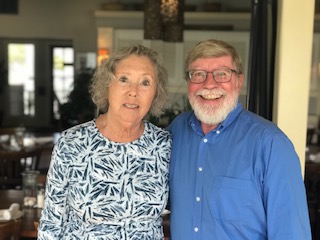
Barbara Fradkin, Donis Casey, Charlotte Hinger, Mario Acevedo, Shelley Burbank, Sybil Johnson, Thomas Kies, Catherine Dilts, and Steve Pease — always ready to Type M for MURDER. “One of 100 Best Creative Writing Blogs.” — Colleges Online. “Typing” since 2006!

Showing posts sorted by relevance for query Thomas Kies. Sort by date Show all posts

Tuesday, July 24, 2018

Please welcome Thomas Kies!

by Rick Blechta

Type M for Murder has a new member! We are most pleased to welcome Thomas Kies. Tom will begin work next Monday and alternate weeks with our delightful Aline Templeton. Please be sure to visit on Monday, July 30th to read Tom’s inaugural post!

In the meantime, here’s some biographical information he’s provided.

Thomas Kies


Tom Kies has wanted to be a mystery writer since he was a little boy, cutting his teeth on every John D. MacDonald novel he could get his hands on. But real life got in the way – working for newspapers and magazines for 30 years and raising three children. So his dream of being a novelist took a back seat.

Tom’s current day job is as the President of the Carteret County Chamber of Commerce on the beautiful coast of North Carolina. At night and on weekends, he writes about murder. His Geneva Chase series starts with Random Road and six naked bodies found hacked to death on an island. Written from the first person point of view of a female alcoholic reporter, Tom says, “I didn’t start out writing as a woman and, frankly, it’s a challenge. But she’s such a snarky smart ass, she gets to say things I wouldn’t dare and that makes her a hell of a lot of fun.”

His second book in the series, Darkness Lane opens with an abused woman torching her sleeping husband. When the police arrive, she’s drinking wine and watching the firemen vainly attempt to douse the fire. “I’m just toasting my husband,” she says.

Concurrently, a fifteen year-old high school student vanishes. The two plots appear to have nothing to do with each other but as Geneva chases down leads, she finds that they are dangerously related.

Tom’s given workshops for various state writers groups as well as the NC Writers Network Fall Conference. Working on Graveyard Bay, he lives on Bogue Banks, a barrier island with his wife Cindy and Lilly, their shih-tzu.

Monday, October 03, 2022

Yes, the Author Was Dead, But the Characters Lived to Tell the Story.


By Cindy Schersching

Full disclosure…Cindy is my wife and she’s written a glowing review of the dinner theater we did a couple of weeks ago.  It was my first attempt at writing for the theater and Cindy’s effusive compliments make me blush.  That being said, here it is, a shameless bit of self-promotion.

The launch of Thomas Kies’ Whisper Room, his fifth book in the Geneva Chase series, was as masterfully orchestrated as his novel.    Kies took the unique approach of dramatizing the book launch as a play within a play – which he also wrote. Talented community theatre actors brought the books’ characters to life.

The play, Death of an Author, was performed in a dinner theatre format to sold-out audiences of more than 100 guests on each of two evenings.   The performance took place at the newly built culinary school at the county’s community college under the leadership of Shana Olmstead, also the co-owner of Morehead City Floyd’s 1921 premiere restaurant. The 3-course dinner was prepared by the students of the culinary school under the supervision of 2 local Escoffier chefs.   The funds raised from the evenings’ performances went directly to supporting students of the culinary school and to the community theatre’s capital campaign to rebuild the theatre heavily damaged by Hurricane Florence in 2018

The emcee for the evening, Pamela Long, oriented the audience to the Geneva Chase mystery series, while the performers mingled among guests and brought the action tableside.

Each actor was given the freedom to develop their book characters as they adopted them, infusing humor and several surprise interactions.   Robin Hamm, the director, molded the diversity of characters into the murder mystery storyline characteristic of Kies’ novels.

Those familiar with the series also recognized dominatrix Shana Neese (realistically portrayed by Karen Lutz), Frank Mancini and his wife, Evelyn (Ray Tillery and Mylissa Maynard), and Gregor Tolbonov (Eduardo Alen).   Caroline Bell (Mara Jennings ), Geneva Chase’s ward, rounded out the cast.  

Minutes into the performance, it was clear that the author, played by Matt Brooks, had unknowingly ingested cyanide laced wine.   He ‘dies’ on the dining room floor.   Geneva Chase (the well-known protagonist of the Kies crime series played by Kim Murdoch) and Matt Dillon assistant Chief of Police (played by theatre veteran Ken Hamm) unsuccessfully attempted to revive him.  His limp body was slid out on a tarp by Dillon and Private Investigator John Stillwater (David Griffith) while servers with entrée platters swerved out of the way.  Publicist Mandy Chahall (Rhonda Osterhoudt) quickly calmed fears by assuring everyone that even though the author was dead his books would still be for sale -  even though it may be difficult to get them signed.    

Geneva confirms that all in the room are suspect.  It was the responsibility of each to determine ‘who killed the author.’

Kies created a mind-boggling matrix as the characters realized their lives continued even though their creator was dead.   This awareness grows as does the realization their freedom to follow their own dreams.   With motives and motivations for the murder revealed and with fingers pointing in all directions, the audience was challenged to identify the murderer.  Prizes were given to those who first correctly figured out the mystery and for the best sleuth costume.

It was a fun filled evening that benefitted all participants.   Each audience called for a repeat experience at the end of the evening.  Books sales were strong and the real author, Kies, signed each.   


Monday, March 23, 2026

Scams, Scams, and More Scams


 by Thomas Kies

I recently received these unsolicited emails. 

Hello Thomas,

I’m reaching out on behalf of The Great Books Society of Denver, a lively community of 680 readers who meet monthly in Englewood, Colorado.

Your work, Random Road, came up in one of our recent discussions, and in true book-lover fashion, we thought: why not go straight to the source? The gritty realism, layered mystery, and complex humanity in your novel resonated deeply with our members. We would love to feature your book as our monthly pick, giving it exposure to an engaged, thoughtful audience who are genuinely excited to read and discuss new works.

Featuring your book with us provides direct engagement with a dedicated community of readers who love to discuss and recommend books, increased visibility among literary enthusiasts who value discovery and thoughtful conversation, and the opportunity for your work to become a memorable part of a month-long reading experience.

If this sounds like your cup of tea (or glass of wine, we don’t judge), please let us know, and we’ll share the next steps to make it happen.

Warm regards,

Organizer | The Great Books Society of Denver

So many compliments. By the way, in a follow-up email, they listed a tiered list of prices for their services. This wouldn’t be a scam, would it?

Hello Thomas Kies

Your book Darkness Lane was recently highlighted by one of our club members. Would you let us know if it’s available for our 7 Day Read Along and upcoming Club Literary Prize?

Organizer, Vienna English Club

Author scams are rampant.  It was a topic of multiple discussions in San Francisco a few weeks ago while I was there attending Left Coast Crime. 

Dan Berry recently wrote a column for the New York Times Book Review talking about scams.  He said that one scammer had reached out to him claiming to be Margeret Atwood (full disclosure, I got one of those too).  Berry contacted Atwood’s agent who wrote back saying, “Oh, this is so terrible and mean. Preying upon people’s hunger for success and/or their hope to improve their writing.”

What are some of the most common author scams these days?

Fake Literary Agents/Publishers: Scammers pose as legit agents, offering publishing contracts in exchange for upfront "reading" or "editing" fees. 

Marketing and PR Scams: Companies promise Hollywood film adaptations, Netflix pitching, or massive marketing campaigns, often targeting indie authors. 

Vanity Presses: These houses demand high fees to publish, promising success but providing little to no real editing or distribution. 

Paid Review Scams: Offers to purchase "guaranteed" reviews on sites like Amazon or Goodreads, according to The Darling Axe.

Impersonation Scams: Scammers use AI and LinkedIn/social media to impersonate well-known publishing professionals, often using using well-known, bestselling authors. 

Award/Contest Scams: Fraudulent literary awards that charge hefty entry fees

Why are these SOBs targeting writers?  Dan Berry summed it up by saying, “…the victim’s vulnerability. A lonely heart yearns for love and companionship: an author yearns for sales and validation. 

Yes, I know this is the second time I’ve published a blog about scams.  I apologize.  It’s just that I know there are people being cheated and it really cheeses me off.   www.thomaskiesauthor.com 


Tuesday, November 22, 2022

Too Dumb for Words

by Charlotte Hinger

Janet Hutchings, the editor of Ellery Queen Mystery Magazine, asked me to create a blog post for their on-line blog. Her guests blog about suspense, short stories and the mystery-fiction scene. I was delighted to have the opportunity. Here's the link to my post: 

The Bliss of Ignorance (by Charlotte Hinger) | SOMETHING IS GOING TO HAPPEN

Last Monday, Thomas Kies, had a great post about how he conducts his writing class. I can't applaud him enough. What a great approach. His classes are kind and helpful. He does his best to help his students achieve their goals. It says the world about the kind of man he is. 

My post was about my lack of writing education when I began my career. I was literally self-taught. Yet, in some ways I was better off because I never heard the discouraging words so many newcomers have to endure.

After a friend of mine read my post she said she wished she had never taken graduate courses in creative writing. That, and a critique group convinced her she had no business ever submitting a thing. She's just now getting her first novel published after picking herself up years later and working up the courage to try again.  

Another friend told me her writing classes leached all creativity from her years ago. She will never write now. 

This just burns me up! What in the world is going on? I didn't have access to either liberal arts colleges or writing groups in the little Western Kansas prairie town I lived in. I learned all the publication processes from books and magazines. What a luxury to learn without pressure. 

I attended my first writing group as a guest of a friend in another state. I had just finished Come Spring, a historical novel, which was later published by Simon and Schuster. I was in awe of the cultured well-dressed attendees. Yet, by the evening's end, I decided it was the meanest group of women I had ever come across. They absolutely slaughtered the work of the only one there who was writing a novel.

How could that poor timid little soul take that week after week? That's the real story of what soured me toward writing groups. I was glad I didn't have any part of my manuscript with me. I would have been expected to read it and probably would never have submitted my work after the group "helped me."

Again, what in the world is going on?

 I can't abide cruelty in any form. It's especially egregious when it comes to creativity. It doesn't take much to blow the flame out of candles. 

Three cheers for Thomas Kies. If you haven't read his post, do so. It a model example of the right way to teach a difficult subject.

Saturday, July 07, 2018

Thomas Kies, Guest Author


Type M is very pleased to welcome guest author Thomas Kies, author of the Geneva Chase Mystery Series. The first novel in his new series, RANDOM ROAD, introduced Geneva Chase, “a reporter with a compelling voice, a damaged woman who recounts her own bittersweet story as she hunts down clues” to murders straight out of a nightmare—six bodies found naked and cut to ribbons in a posh Connecticut home. Thomas lives and writes on a barrier island on the coast of North Carolina with his wife, Cindy, and Lilly, their Shih-Tzu. He has a long career working for newspapers and magazines, primarily in New England and New York, and is currently working on his next novel, GRAVEYARD BAY.
___________________

How Crazy is Your Research?


From nine until five, Monday through Friday, I’m the President of the Carteret County Chamber of Commerce. We’re right on coast of North Carolina and we’re blessed with beautiful beaches, world class cuisine, and some of the best fishing you’ll ever see. I’m the head cheerleader for one of the nicest places on earth.

Being the head of the Chamber of Commerce comes with a reputation that’s wholesome, upright, and good for the community. Heck, when the sun’s shining, it’s called Chamber of Commerce weather. Who else has their own damned weather?

But on weekends and after work, I think about and write things that are dark and, according to my wife, deeply disturbed. I write mysteries.

That requires certain tidbits of knowledge that others may not have, and certainly nothing that a president of a chamber of commerce should be harboring. For example, in my first mystery, RANDOM ROAD, a swingers’ club figures prominently in the plotline. I’ve lost track of the number of people who’ve read the book and asked me how I know what the inside of one of those clubs looks like. Because I worked in newspapers and magazines for over thirty years, I have the inside dope on a lot of stuff. It doesn’t mean I was a member.


In my second book, DARKNESS LANE, there’s a creepy scene that takes place in an exclusive diamond merchant’s shop. It’s expensive, well-secured, hard to find, and by-appointment only. Yes, that’s based on a real jeweler’s establishment. Full disclosure, in real life, the owner was murdered there.

The theater and haunted mansion scenes in DARKNESS LANE? Based on real locations in Fairfield County, Connecticut where the book takes place. I have pictures on my phone. I can share if you like.

 In the book I’m writing now, GRAVEYARD BAY, there’s a scene from a professional dominatrix’s BDSM dungeon. Have I actually seen one? Oh, yes. Was I a client? Hell, no.

But then there’s the stuff I don’t know or haven’t seen.

Let me digress for a moment. When I attended my first Mystery Writers Conference, there were multiple workshops given by authors, publishers, agents, cops, ex-FBI agents, forensic specialists, and physicians. We discussed everything from how to kill someone, to hiding the body, to what the body would look like after being in the water for a week. Questions were asked and answered. Will someone die after eating ground glass? What is a fatal dosage of Fentanyl? When someone is killed and thrown into the water, how do you keep them from floating to the surface?

If you were someone off the street just wandering into one of those workshops, you’d think you’d stumbled onto a coven of psychopaths. Weird? Certainly. Scary? Maybe. Fun? It is if you’re a mystery aficionado.


So, doing research at home is very similar. If someone were to look at my browsing history on my computer (my home laptop, not my work computer…oh, no—that would be wrong), they’d be tempted to call Homeland Security or the FBI. Let’s take a look at some of the topics I’ve Googled or YouTubed: The Russian Mafia, Los Zetas, M-13, explosives, pill mills, AK rifles, handcuffs, sex trafficking, ice pick murders, samurai sword, killer clowns, theater make-up techniques, Aryan Brotherhood, and hypothermia.

Some of the headlines of articles I’ve downloaded: Garage owner charged with selling drugs. Prominent developer killed by train. Real estate agent charged with home burglary. Florida nanny found dead in woods reportedly tortured before her murder. Body found in floating barrel identified, but name is withheld. Students mine data to find where unfaithful husbands live.


Those are actual headlines!

So, speaking of data mining, you can only imagine what Facebook has on me. And the ads that pop up unbidden on my computer screen? There’s an algorithm working overtime that’s dropping the weirdest advertising possible in my emails and on my newsfeed.

But then there’s the old fashion way of doing your research. This is where you get a feel for a scene or the flavor of the action. Talk to the experts. I have friends in law enforcement that help keep me on track (what happens when someone goes missing?). Some of them are avid readers so I want to get it right. There are doctors (so what does that broken arm look like?) and attorneys (walk me through a plea deal) in my Rotary Club who are fans as well. They don’t mind that I ask them questions, even if their answers never make it into a novel.

I’ve also spent time in police headquarters, hospitals, prison (not much time), and courtrooms. It gives you a chance to see, listen, feel, and smell the scene. I love researching my books.

And while knowing your subject matter is a good thing, Stephen King writes, “You may be entranced with what you’re learning about the flesh-eating bacteria, the sewer system of New York, or the I.Q. of potential collie puts, but your readers are probably going to care a lot more about your characters and your story.”

I try to tell the best story I can, but I also try to make it as realistic as possible. I research some pretty strange stuff…just don’t tell my Chamber of Commerce board of directors.

COMING JUNE 2018! The second book in the Geneva Chase series, DARKNESS LANE, is coming in June 2018! Pre-order now to be the first to read Geneva Chase's latest account.

Visit Tom's website at www.thomaskiesauthor.com

Monday, May 20, 2019

Babies and developing characters

This past weekend, my wife and I flew to Kentucky, to visit my family and my new grandchildren, twins Thomas and Caroline. We were both over the moon to be able to hold the little ones and watch their little personalities start to shine through.

On our last day in Kentucky, I was driving to a local Outlet Shopping Mall (it’s not all playing with the kiddos), I mentioned to Cindy that I needed to do a blog for Type M for Murder for Monday and I didn’t have a clue what I was going to write about. She suggested that I talk a little bit about character development.

She suggested that creating characters is a little like babies growing up. They start out as tiny blank slates, but instead of looking vaguely like a tiny Winston Churchill, our developing characters often start as people we know.

Babies, as they grow, take on their own personality, adopting traits of their parents, traits of their extended families, their friends, their teachers, and others that they emulate, knowingly or not. Our characters grow out of the back stories we give them.

Thomas and Caroline, fraternal twins, already seem to have two distinct personalities, even at five months. Thomas is quiet, observant, physical, sometimes wriggling out a short, loud temper tantrum. But he’s also curious, loves to interact with his toys, and loves to snuggle. So far, he’s the introvert.

Caroline is a verbal chatterbox (as much as a five month old can be), loves to smile, loves to be held and also loves to snuggle. She’s the obvious extrovert.

What amazed me was the way they reached for each other as they lay on their backs on a blanket on the floor. Did they already have a telepathic connection?

As I create my characters, they don’t emerge from my imagination as fully formed individuals. They are often based on people that I know or have met but with a Thomas Kies slant. I’ll give an example. One of my favorite recurring characters in the Geneva Chase series is Frank Mancini. Frank is a successful estate attorney, very attractive, bright, funny, athletic, and, according Geneva Chase, dynamite in the sack.

Frank’s flaws? He’s egocentric, a cad, and a serial adulterer. He’s married but that doesn’t get in his way.

The actual person I based Frank on is physically very similar. He’s also intelligent and funny. But my friend is fiercely devoted to his wife and a really nice guy. I’ll never tell him that Frank Mancini is his evil doppelganger.

I’ve found that character development, much like in real life, comes over time. People develop and change within the arc of the story. Sometimes they change in good ways, sometimes in bad. But change is a constant, nothing stays the same.

Because I’m writing this from a hotel room while my wife is out shopping, this blog is purposely short. I’d better put my computer away, drive out to the Outlet Shops, and pick up Cindy before her charge card goes up in flames.

Post script…when I picked Cindy up at the Outlet Mall, she hadn’t purchased a thing. That’s not how I would have written that at all.

Post post script... a good suggested writing exercise—while waiting for your flight, describe the people you see and create an interesting back story for them. What is their profession? What is their romantic status? Where are they flying to and why?

Exercise advice, don’t stare too long. You could find out more about their personality than you really want to.

Friday, October 22, 2021

Surprise!


Last week I picked up Thomas Kies's book, Shadow Hill, when I was in Barnes and Noble. I was delighted to see it prominently displayed on a table with the country's most prestigious fiction writers. I was heading to North Carolina to visit my daughter and I knew Thomas lived in that state.

Her family had rented a vacation house in Beaufort and when I arrived and cracked open the book, I realized from the flap copy he was the president of the Chamber of Commerce of the county where we would be staying. The very same county! And the very same town!

I emailed him immediately and much to my delight, he invited me to lunch. Naturally, our conversation focused on publishing and also how fortunate we were to be included in Type M For Murder. Type M is one of the oldest running blogs--since 2006. Our outstanding blogmaster, Rick Blechta is responsible for it's longevity. He gives a new meaning to "faithful to the task."

Thomas and I are with the same publishing house, Poisoned Pen Press, which was purchased by Sourcebooks several years ago. It was fun to recall the lessons we had to learn about writing, and how fortunate we were to have skilled editors to teach us how to improve our books. 

Oh the lessons I've had to learn! The humiliation I've endured. My third most embarrassing moment involved Barbara Peters. I have the world's second worst sense of direction. I was so thrilled when I was to appear at the bookstore for an interview. The other author was Michael Bowen. When I arrived and parked my car, I headed up the street in the wrong direction. Arizona was in the midst of an ungodly heat wave. 

I walked forever before I realized my mistake, nearly had a heat stroke, did an about-face, arrived sweaty, red-faced, with my lovely outfit limp and wilted. I was barely on time and went swanning in like one of those vain persons who make a dramatic late entrance. My hopes of making a good first impression on this poised sophisticated lady lessened to striving to sit upright on the stool. I settled for recalling my own name and hoped my blood pressure would return to normal. 

Nope! I'm not going to tell you who has the worst sense of direction because she's another author and I haven't asked her permission. But I will say she was at the wheel while her husband and family were asleep when returning from a Western Writers Convention. She was headed toward their home in Amarillo, Texas and ended up in Spearfish, South Dakota. Boy, was her husband startled when he woke up.


Tuesday, January 26, 2021

File under: You Can’t Please ’Em All

By Rick Blechta

You’ve just got to read Tom Kies’ post (just below this post). I read that and was laughing out loud — really.


“It takes all kinds,” is all I have to say.


I guess it comes down to people’s self-importance. Tom’s correspondent obviously feels he/she Must Teach Thomas Kies A Lesson. My response would be, “As if I care.” It’s not that I’m a hard-ass. I really do want everyone to enjoy my novels and I do feel bad when someone doesn’t. But…


I learned a long time ago that you have to be willing to take the punches when you put your work out in public. Every author has collected a fair share of bad reviews. I certainly have.


But what gets up my nose is when I’m lectured to. Tom’s correspondent is obviously trying to make a point — a needless point, really — that they are better than him, more understanding and more gracious. He obviously insulted this person greatly, but it was only because they feel self-important. “Let me point out the error of your ways, son…”


I have been on the receiving end of some rather, shall we say, pointed emails over my writing years. With only one exception they were prompted by errors I’d made. Some people are kind when they do this, but some people use this information to try to hurt. The funny thing is, my first response to an error I’ve made is that I’ve let down my readers. Why? Because I could have avoided those errors by doing better research. I should have fact-checked something but didn’t. I do not hesitate to issue a mea culpa in these cases, vow to do better in the future, and always reply. The emails that are obviously meant to be hurtful or prove the correspondent’s superior knowledge I ignore. I figure they’ve got issues that make them do this, so it’s better not to engage.


Years ago now I was doing a signing with Vicki Delany since we both had new books out. One lady came up, looked over my new book


“I think I may have read one of your books before,” she told me. Looking at the back cover, she added, “Yes. I did. I didn’t like it very much. It was a bad book.”


And with that, she walked away.


Why would someone think this was the way to handle this situation?


I guess the (generous) answer is, “It takes all kinds.”


But the juvenile inside of me was tempted to shout out, “Well, at least I’m not an ugly person like you!”

Monday, February 20, 2023

First Piece Published--Feeling Remembered.


 by Thomas Kies

As I was walking Annie, our dog, one morning, I thought about the first piece of fiction that I was lucky enough to have published back in 1979.  It was a short story called Fast Dancing Detroit Style.  No, it wasn’t a mystery story.  It was horror—an erotic ghost story. I was paid $250, I was 26 at the time and I thought I was hot as a box of matches.

After all.  I’d been published in Cavalier magazine, the same publication where Stephen King got his start. With the same editor that he worked with, Maurice DeWalt.  

And yes, Cavalier was a men’s magazine that featured some of the top writers of the time, but it was also filled with full frontal nude women.  I remember proudly telling my father about being published and a couple of days later he phoned me to tell me how humiliating it had been to go into an adult bookstore to buy the magazine. I’m not sure he ever told me if he liked the story or not.  

Cavalier was launched by Fawcett Publications in 1952.  The original format was to feature novels and novelettes by Fawcett’s Gold Medal authors like Richard Prather and Micky Spillane. During the 1960s, the magazine featured such writers as Ray Bradbury, Isaac Asimov, Robert Coover, Richard Gehman, Garson Kanin, Paul Krassner, John D. MacDonald, Albert Moravia, Thomas Pynchon, Robert Shelton, Isaac Bashevis Singer, Theodore Sturgeon and Colin Wilson.

Film critic Manny Farber had a monthly column in the 1960s. Stephen King was a contributor during the 1970s, and his stories were also featured in Cavalier Yearbook.

I followed up my first published story with more horror only to be turned down by Mr. DeWalt saying, “These are too much like Stephen King.”  Okay…I guess that’s not bad.  

I tried other magazines, mostly “pulp publications” like Isaac Asimov’s Science Fiction, Fantasy and Science Fiction, Amazing, Weird Tales, Analog, and Strange Tales.  The cover pages, by the way, often featured illustrations of scantily clad women in the clutches of space aliens.  

I even submitted short stores to Playboy (no luck there) and Omni, a glossy four-color magazine devoted to both science fiction and science fact.  The editor was Ben Bova.  He was the author of over 120 books on science and science fiction, had won the Hugo Award six times, and was the president of the National Space Society and the Science Fiction Writers of America. 

He sent me a personal rejection letter on one of my submissions with a handwritten note that said, “,,,keep at it.  You’re a good writer.”  

That was in the 70s and 80s and I was raising a family and working full time at the Elmira Star-Gazette. I wrote short stories in my spare time on my manual typewriter at my desk tucked away on the porch.  On the wall next to my desk was a corkboard where I kept the rejections slips.  

Back then, you’d submit stories by hardcopy via the mail accompanied by a self-addressed stamped envelope so that if your story was rejected, you’d at least hear back with a pre-printed slip of paper saying that they were sorry they couldn’t respond personally and that your story just wasn’t right for their publication. 

So, I found my copy of Cavalier from 44 years ago that I tucked away in a closet and reread my erotic horror story.  Could I have improved upon it?  Sure.

But you know, I enjoyed reading it.  Almost as much as I did when it first arrived in my mailbox a lifetime ago. But I think I'll stick with mysteries. 

Monday, August 25, 2025

You Can't Go Home Again


by Thomas Kies

Thomas Wolfe wrote the novel You Can’t Go Home Again. 

I saw just how true that is when, a few weeks ago, I went back to where I spent most of my formative years.  I’ve been aching to go back to see the places where I grew up, places where many of my fondest memories originated, places that made me smile. 

Well, I did that. First of all, it’s not easy to get from here to there.

I booked a flight from where we live now to where I used to live. Our closest airport is an hour away and the flight was wheels up at five in the morning.  Want to guess how early I had to wake up to get there on time?

Then a three-hour layover in Charlotte.  Time enough for breakfast and a snooze at the gate.

Upon arriving in Rochester, New York, I rented a car and drove two hours to get to Corning, New York, where I was born.  By the way, that hospital where I drew my first breath is long gone. I think there are condos or apartments there now.  

That night, I had dinner with two of my cousins and their spouses.  I hadn’t seen them since we were all children, so it was delightful to catch up.  The only downside was Sorges, the restaurant where I really wanted to dine, had closed a few years earlier.  It was where I had my first real Italian meal, spaghetti and meatballs, and it was sheer perfection. 

Then the next day it was rainy so my brother, who lives up there, and I went driving.  We went to look for our grandparents’ old house, a cottage on the shore of a tiny lake in the Finger Lakes region.  We found it, kind of.  It had been torn down and a new house was in its place.  

This was where, as a child, I could let my imagination run wild.  During the winter, there were hardly any other people living on that lake so I could hike and explore.  I could be a pirate, a pioneer, a spy. It was where I tried to write my first mystery using my grandfather’s old Remington rand typewriter.

But this was now a lake of tourists and second-home owners. The house where I’d grown up was gone.

The nearest town to that lake is Tyrone. It’s a place so small, there isn’t a stop light or a stop sign. There was one tiny store there, Ray Dann’s.  It was where we could get gasoline for the boat.  It was where I could get an ice-cold bottle of Coke and a popsicle. It was a place where you could buy bologna and bait, fishing lures and Wonder bread, tires and milk.  


It was closed.  The windows were broken, and the place was gutted.

On my final day, I drove past the house where my first wife and I lived. It’s on a quiet rural road. We were there when all three of our children were born.  It was so tiny.  But it was warm in the winter and let the sun in during the summer. It was where I would write my first published short story.

But as I drove by, the windows were covered in dark fabric, and No Trespassing signs were all over the place.  “Meth lab,” I muttered to myself as I stopped and stared.  Then I drove up to the corner to turn around and head back to my hotel.

Driving back past our old home, someone got into a black truck parked in the house next door.  They followed me until I got to the parking lot of a fire house where I stopped and recalibrated the GPS on my phone (all the roads were updated and changed).  The truck pulled up next to me, the window slid down, and a rough character wearing a doo-rag growled, “You lost?”

I explained that I lived there forty years earlier and was just looking around, gathering memories.

“Where you headed?”

“Back downtown.”

“Want directions?”

Dear God, no.  I held up my phone.  “Got them, thank you.”

Nope, you really can’t go home again.


So, I had a chance to catch up with two wonderful high school friends I haven’t seen in 50 years, had dinner with my cousins, and caught up my brother and his family.  I took a boat ride on Seneca Lake, walked down Watkins Glen, and tried counting all the wineries that have thrived in that region since I left, so many years ago. So, many wineries. 


It’s all changed.  As it should.  

The setting of my new book is in that region of New York, and it was good to see the places I’d written.  I’d gotten those right. 

And my old hometown, Dundee?  It quite literally looks the same. The school, the bowling alley, and the library, none of them were much different than when I left fifty years ago. Almost like something from a Twilight Zone episode.

Then I flew home, where I live now.  This is home. 

Monday, August 21, 2023

Writers Are Readers, Right?


 by Thomas Kies

I got a phone call from a man who was referred to me by a friend.  Apparently, they were talking about life insurance.  I know, I know, not the most exciting subject in the world.  But it was during their conversation that the man confessed to my friend that he was interested in writing a book.  Being as I’m the only published novelist my friend knows personally, he naturally gave him my phone number. 

To my friend’s credit, he gave him my OFFICE number and not my personal cellphone.  So good on him.  

To keep anyone from being embarrassed, let’s call the man Charlie.  Charlie called me and politely told me what he would like to talk to me about.  Now, I love to talk about books, writing, and publishing. So, we scheduled a meeting the very next day.

I was happy to spend time with Charlie.  He asked good questions and took copious notes.  We discussed the positives and negatives of traditional publishing, self-publishing, and hybrid publishing. I told him how valuable it is to join a writers’ group and get a beta reader…no, not his wife or any of his children. We talked about how you need a good editor and how you need to sit down and write something every single day.  That’s what writers do. 

I asked him what genre he was interested in.  Charlie told me he wanted to write a thriller. Then I asked him who is your favorite author and what do you like to read?

His answer was, “Well, I’m not much of a reader.”

WHAT?

My question for the audience is, can you be a writer without being a reader?  In my opinion, NO!

Stephen King said, “If you want to be a writer, you must do two things above all else: read a lot and write a lot.”

If Charlie wants to be a writer of thrillers, he’d be best served by reading thriller novels.  He’d be studying the writers who have made it happen. They’ve not only gotten published, but they managed to get onto best seller lists.  Writers like Lee Child, Brad Thor, Gillian Flynn, Don Winslow, David Baldacci, S.A. Cosby, Stephen Mack Jones, Stieg Larsson, Karin Slaughter, and Thomas Harris, just to name a few. 

It's how you can study plot structure, pacing, grammar, character development as well as a hundred other writing items you should know about if you’re going to try to write a book that someone will want to read. 

To Charlie’s credit, he’s not alone.  I’ve lost count of the people who have taken one of my Creative Writing classes at our local college that have answered that same question, “What do you read and who is your favorite author?”  And their answer has been, “I’m not much of a reader.”

But, on the flip side of that equation, I’ve found that the best writers who have taken my class are indeed dedicated readers.  They not only study the craft and work at it but enjoy reading.  

How can you not?    www.thomaskiesauthor.com

Tuesday, March 22, 2022

Writer's Guidelines

Nearly every publishing house with a website has a "submissions" tab containing instructions for submitting material. Agents also post their requirements. 

Thomas Kies's post give excellent tips on acquiring an agent. About 85% of the books in Barnes and Noble and other chain sellers are published by the large conglomerates that dominate the industry. Most (but not all) will only look at manuscripts submitted through an agency. Agents separate the wheat from the chaff. 

One agent I know said she received 9,000 queries the month after her agency was spotlighted in Writer's Digest. How much time do you suppose she spent reading these letters? You would be amazed at how quickly agents decide which manuscripts they would like to see. 

Thomas mentioned that when he submitted material, he had followed each agent's guidelines exactly. 

That may sound elementary, but it isn't. I wish I had kept track over the years of the number of writers who have told me no one will look at their novel or non-fiction book. If I offer to "help" (That's the subject for another column) I quickly realize that no one--not a soul--has looked at the manuscript. Why? Because the writer ignored the submission guidelines or wrote a poor query letter. 

Here are some of the most egregious errors: 

1. Sending a snail mail letter when the guidelines ask for email submissions.

     I've also seen hand printed coffee-stained letters with the stamp in the wrong place and the editor's name misspelled. 

2. Ignoring the requested format for the query.

    If the agent asks for one page and can see at a glance that your query letter goes on and on for several pages, you're doomed. She knows immediately that you won't follow instructions. 

3.  Assuring the agent that this is the most wonderful manuscript since the first Harry Potter.

     Oh really? They've heard that before. Also, that everyone just loved your manuscript. They don't care who liked it. They care about selling your manuscript. 

4.  Talking about everything but what the agent needs to know.

    Mention up front if your book is psychological suspense, a cozy mystery, a classic who-done-it, a spy novel. And always state the word count. 

The good news in all this is that detailed information about writing query letters can be found on-line. A good query letter is a business letter. It should be short and to the point. 


Monday, December 13, 2021

Playing Pretend


By Thomas Kies

Last Friday was the third birthday of my twin grandchildren, Thomas and Caroline.  Not recalling what three-year-old children enjoy getting as a present, I asked my daughter, Jessica, what she thought the kiddos would like.  She told me, “They like to play dress up. They also like to play with a plain cardboard box.  So…”

I decided to go with something the kids could dress up as, rather than a plain cardboard box. I’d leave that for another time.  I went to the internet and found firefighter outfits, complete with hard hat, fire extinguisher, and wait for it, a real siren.

On their birthday, my daughter posted photos and video of the kiddos in their firefighter coats and hats (on backwards) with the siren wailing.  At the end of the video, the twins say, “Thank you, Grandpa Tom and we love you, Grandpa Tom.”

Yeah, it melted my heart.  I wished I could have been there, but we’re still being Covid cautious.

Oh, and I apologized to my daughter and son-in-law for the sirens. I'm not sure I convinced my son-in-law that I'm being genuine.

Watching the kids enjoy themselves, it made me think how much I liked playing pretend when I was a child.  

Is that why we enjoy writing?  Because we get to play pretend?

At my last Advanced Creative Writing class of the year, I talked a little bit about a writer’s voice.  It’s about the perception, not as the writer, but as the character.

People see the same scene, event, occurrence, but we all perceive it just a little bit differently from each other.  When we write, we have to get inside our characters’ heads and tell the story from their point of view.

We’re pretending to be someone else.

We’re the the bold protagonist, complete with all his or her flaws, including, sometimes their skewed perceptions.  On paper, we’re pretending to be as brave and as adventurous as they are. 

We’re the unscrupulous and homicidal villain, complete with their deeply flawed perceptions. As we're writing them, we're as evil and cruel and twisted as they are. 

When we’re writing, it’s not only okay to pretend, it’s our job. When we’re not writing, however, we are often still pretending, depending on where we are and who we're around. Are we the same person with our spouse that we are with our boss?

Are we the same person when we’re driving, and someone cuts us off and nobody can hear us cussing out the stupid driver who had just put us in danger?  I hope not.

When we’re young, we love trying out different personas and pretending we’re explorers, pirates, cops, and firefighters.  As we grow up, unless we become actors and actresses, we start to lose the joy of pretending, although we never really lose the ability.

For a time, I tried my hand at marketing and sales. I wasn’t a natural at it and I was uncomfortable trying to persuade someone to buy something they might not be interested in in the first place.  I also hated the idea of being rejected and told no.

Which is really weird, because starting out as a writer, you have to be able to accept rejection gracefully. Over and over again.

So, in my head, I channeled Jack Nicholson.  Before walking in to see a client, I asked myself, “How would Jack Nicholson handle this.  What would he say and how would he say it?"

And then it was fun. Why Jack Nicholson? Jake Gittes from the movie Chinatown didn’t give a damn about rejection. 

So, for me, writing is playing pretend.  I get to be all kinds of different people. Getting to be my protagonist, Geneva Chase, is the most fun of all.  She gets to say all the things that I may have in my head but could never say in real life. The lady is a real snarky, smart-ass.

This is my last posting before Christmas, so I’m going be genuine for a moment and take this opportunity to say have a wonderful and safe holiday.  Cheers. 

Tuesday, May 31, 2022

Memorial Day

 I prefer to write this column the day before it's due. But all my work has been overshadowed by the massacre in Texas. Our whole country is in mourning. Thomas Kies's post summed up my feelings. I can't improve on what he said. My heart goes out to all the families affected by this tragedy. 

As Thomas said, writers are very good at putting ourselves into other peoples' heads. I'm haunted by the image of little children lying on the floor, playing dead, praying for help that doesn't come soon enough, knowing that if they move, they will die, the overwhelming terror of it all. 

Memorial Day used to be one of my favorite holidays. I grew up in Eastern Kansas very close to the Missouri line. Peonies burst forth in all their glory at that time of year. Roses, never pruned, climbed over fences and clung to sides of our outbuildings. We stuffed these wonderfully odorous flowers into water-filled buckets and made our annual parade through the many grave sites in Lone Elm, Kincaid, and Garnett. 

There were never any artificial flowers deposited on the graves. Just blooms from our own yards. We would stop and talk with various family members who had also come to pay homage to their dead. It was the only time I saw some of my distant and aunts and uncles during the year. Memorial Day was a journey and a ritual for so many families. My parents would introduce me to a bewildering number of relations and catch up on news.

I would hear stories about people buried at each site. Invariably, someone would explain a connection: "Yes, this Baby Ruby, Clarence and Mattie's daughter. Yes, she was just four. She died at a community dance. She fell and hit her head." (True story). 

Now Memorial Day has become simply a three-day weekend with more drunk drivers to contend with, and more events ending up in shooting sprees. Yesterday I yearned for those innocent days when families traveled to hometowns to honor their loved ones.

I'm yearning for a time, a week, or even a day when this country doesn't have its heart ripped out. 

Monday, July 25, 2022

My Book Launch and Creativity

 By Thomas Kies


Whisper Room, my fifth novel, is due for release on August 2nd and obviously I couldn’t be any happier.  I’m busy preparing for book signing events taking place starting this weekend (yes, I know, it’s a couple of days early). That being said, I’m going to cheat this week and rerun one of my favorite blogs that I’ve written.  This one seems appropriate.  It’s simply entitled: Creativity.

         Creativity

There’s a theory that everyone is born with in innate sense of creativity.  As babies grow into toddlers, and toddlers grow into school age children, they have within them a sense of adventure and curiosity.  As they discover and learn, they take great joy in creating, whether it’s coloring, drawing, painting, singing, dancing, or making castles out of Legos. 

That same theory posits that as we grow into adulthood, we’re often urged to forget our creative side and conform.  Buckle down, do what’s necessary, make money.  

But that creative spark, though dampened, lives on in all of us.  It may come back out in the form of a hobby, tending a garden, making a special dinner, or redecorating a room.

This weekend my wife and I had an outstanding dinner at the house of two friends of ours.  In addition to a delightful meal, the conversation was thought provoking.  We talked about food (of course), home remodeling, a smattering of politics, watching your adult children evolve, and ghosts.  Yes, ghosts.

We also had a very interesting discussion about creativity.

We can save our discussion on ghosts for another blog.

Being of a certain age, we all had former lives and are all redefining ourselves.  One of us was a concert pianist who performed all over the world.  Her husband was a noteworthy magazine publisher.  Now they own a boutique hotel here on the coast, in a historic little town right on the waterfront.  They’ve redecorated, upgraded, installed a 21st Century computer and reservation system, and began a marketing program that includes sophisticated usage of social media. 

Additionally, they buy fixer-upper homes, make them look pretty, and sell them, moving on to the next project.  

They’ve traded one set of creative skills for another.  

My wife was at one time a very successful market research analysist who had done work for major corporations all over the world.  She’s retired now, and during our discussion, wondered what her creative superpower might be. 

During our earlier discussion, we talked about her enjoyment of genealogy and how it led to her discovery of a brother she never knew she had.  It’s an amazing story that I may share on another occasion.  But the conclusion we reached was Cindy’s creative superpower was in her curiosity.  She’s a discoverer—an explorer. 

Mine is that I’m a crime novelist and I make stuff up.  Being a novelist has always been a dream of mine.

I read where the definition of creativity is: Transforming your ideas, dreams, and imagination into reality. 

An article from Huffington Post cited a recent New Zealand study which says that “engaging in creative activities contributes to an “upward spiral” of positive emotions, psychological well-being, and feelings of “flourishing” in life.”

The Pacific Standard Magazine cited another study conducted at the University of North Carolina – Greensboro on college students that says that “those who reported feeling happy and active were more likely to be doing something creative at the time.”

When I think about it, the happiest people I know are the ones who are creating and/or exploring—trying new things. 

So, what do you do to get your creative spark fired up?

I take a walk around our neighborhood or up to the beach.  I find that by the time I get back, I have a fresh perspective on what I’m currently working on.

Here are some other suggestions I found on the web:

Keep a journal and jot down ideas as they occur to you.

Exercise.

Take a media break.

Read a book.

Don’t be afraid to play.  Thomas Edison’s notebooks and Alexander Graham Bell’s prototypes suggest that they played while working. 

Take a break from your daily routine.

Try to think about things and look at the world around you in a different way. 

And finally—I like this one the best—dare to dream!

Monday, February 22, 2021

Ink In Her Veins


 By Thomas Kies

The headline in my county’s Sunday newspaper is “Nothing to See Here”, referring to the efforts of local politicians to get a bill passed eliminating the requirement to post public notices in the paper.  They would like, instead, to post them on the county website.  

Yet another attack on newspapers. 

The protagonist in my Geneva Chase Mystery series is a crime reporter for a small independent newspaper that’s on the brink of being purchased by a media conglomerate.  Geneva is based on several women I’ve worked with over the years when I too worked in the newspaper and publishing business.  

It’s a business that I loved.  I did everything, including working as a pressman on a Goss web press in Detroit, becoming a staff writer, eventually becoming an editor, then moving into advertising management, and ultimately becoming the publisher and general manager of a magazine publishing house here on the coast of North Carolina. 

 I even delivered newspapers during a blizzard in one of the company’s ancient, rear-wheel drive vans.   Yikes.

The business was exciting, interesting, and fun, but filled with the pressures of working on a deadline.  

Unfortunately, the business has changed.  The combination of the Great Recession, the effects of the Internet, and Covid-19 has been disastrous for newspapers.  Their main source of revenue is advertising and all three of the factors I presented have shrunk that revenue stream.  

Before the Great Recession, the housing market was booming.  Real estate companies were spending a fortune in the classified section of newspapers, along with car dealerships, and companies looking to hire employees.  

Starting in 2007-2008, the housing bubble burst followed by cascading disasters in employment and consumer confidence.  Companies who always knew about the Internet, suddenly found it very attractive.  It was cheap and easy to use.  

The lucrative classified pages in newspapers diminished to a disastrous level. The advertising in the main pages of the paper also either got smaller or went away altogether. 

According to a New York Times article in December of 2019, over the past 15 years, more than one in five papers in the United States has shuttered, and the number of journalists working for newspapers has been cut in half, according to research by the University of North Carolina’s School of Media and Journalism. That has led to the rise of hollowed-out “ghost papers” and communities across the country without any local paper. “Ghost papers” are publications what have severely cut the staff in their newsrooms making any kind of investigative reporting non-existent. 

Covid-19 has delivered even more pain to newspapers.  When the world shut down in March of 2020, stores, shops, bars, and restaurants all closed their doors for months. Advertising became even scarcer.  Even with the world starting to open back up, the number of pages in your local newspaper has become less and less.  

An unexpected circumstance from the experience of working from home, more newspaper companies are closing their newsrooms, having offsite printing companies produce their publications, and selling their buildings and assets.

A huge part of the joy of working for a newspaper was being with the people you worked with.  Yes, the pressure of daily deadlines could lead to fraying nerves and in-office tension.  But at the end of the day, these people were your “newspaper family”.  Even though I’ve been out of the business for more than ten years, I still stay in close touch with a lot of them even if it’s through social media on the Internet.

Speaking of the Internet, the way people get their news has changed dramatically.

The transition of news from print, television and radio to digital spaces has caused huge disruptions in the traditional news industry, especially the print news industry. It’s also reflected in the ways individual Americans say they are getting their news. A large majority of Americans get news at least sometimes from digital devices, according to a Pew Research Center survey conducted Aug. 31-Sept. 7, 2020.

More than eight-in-ten U.S. adults (86%) say they get news from a smartphone, computer or tablet “often” or “sometimes,” including 60% who say they do so often. This is higher than the portion who get news from television, though 68% get news from TV at least sometimes and 40% do so often. Americans turn to radio and print publications for news far less frequently, with half saying they turn to radio at least sometimes (16% do so often) and about a third (32%) saying the same of print (10% get news from print publications often).

The point of this rambling blog is that even in fiction, I’m transitioning Geneva Chase, crime reporter, into going freelance, working gigs for her newspaper on occasion, and working for a company called Lodestar Analytics that does open-source research as well as instigating deep dive investigations.  

Personally, I still like newspapers.  I get the paper out of Raleigh every day (even they’ve stopped printing on Saturdays, however) and my local newspaper (which has cut back from three days a week to two), as well as the Sunday New York Times (which seems to be flourishing).

I also subscribe to a digital Washington Post feed and routinely scan other websites (all free) for news from around the globe. I’m a news junkie and the Internet feeds my addiction. 

Still, I’m happiest when I’m writing scenes where Geneva Chase is working in the newsroom.  She’s got ink in her veins. I’d like to think that I do too.

Monday, January 10, 2022

Dystopian News and Focusing on Writing


 By Thomas Kies

I’m an unabashed news junkie.  My career for over thirty years was in newspapers and magazines so being a news geek just comes naturally.  I love the physical feel of a newspaper and we get our local paper delivered here twice a week (we really don’t have enough going on here for more editions than that), the News and Observer out of Raleigh every day except for Saturday, and the Sunday New York Times.  Additionally, I subscribe to the online versions of the Washington Post and my old newspaper, the Norwalk Hour. 

Put that together with all of the other free news websites available and I’m down a rabbit hole instead of writing. 

It is so darned easy to get distracted.  Just in a single Op-Ed section of a Sunday New York Times, there were pieces about how different countries were being affected by climate change, how the new covid variant was raging through the country, and how the divisive nature of our political and cultural landscape is slowly leading up to more violence and the possible end of our democracy.

If those aren’t the ingredients for a dystopian novel, I don’t know what is.  How on earth can anyone concentrate on writing a mystery with so many crazy things happening all at once?

I do a number of things to give myself direction.  I’m very lucky that I live on a barrier island here on the coast of North Carolina, so when I want to clear my head, I’ll take a ten-minute walk to the beach.  Usually, by the time I’ve gotten back home, I can sit down and hit the keyboard.

If I get stalled, I’ll bribe myself.  I’m a coffee addict so before I top off my latest cup of caffeine, I’ll force myself to write at least another couple of paragraphs. 

If I get frustrated with my progress, I’ll get up from my desk and wander around the house, thinking of dialogue.  Sometimes I use it, sometimes I don’t. But it gets the creative juices flowing.

Here’s a question.  Do all writers hear voices in their heads?

For me, starting a new book is the absolute hardest because you’re creating a new plotline, new characters, and new locations.  Everything is being made up of whole cloth. 

Right now, I’m about eighty pages into my new project and yesterday, I went back to the first few chapters to smooth out the rough edges and polish the prose. That was fun!  This afternoon I’ll do another few chapters.

Hopefully, by the time I get back to where I left off, I’ll have hit that place when the story starts to write itself.  It’s where the characters take on a life of their own and you know where the book is going.

Right now, however, I don’t even know who the bad guy is.  Bu that really is part of the fun, isn’t it?

Monday, March 07, 2022

The Last Class

 By Thomas Kies

Tonight will be the last class in my Creative Writing workshop series at the college.  The last class is always a little bittersweet, although many of the participants sign up for my Advanced class starting in three weeks, so I’ll get the chance to work with them again.

This time around, there were seven people in the group.  Starting out, no one knows anything about each other. By the end of six weeks, they’re all friends, supporting each other in their writing, and sometimes their lives. 

Every week, I give them a writing prompt and the following week they read it in front of the class.  Now, I know how scary that is.  I’ve been reading my own work in front of groups for years, and I still get the heebie-jeebies. To make it easier on them and a positive experience, after the students read the piece they’ve written, the class applauds, and we go around the room talking about what we liked about what they’ve written and what might make it stronger.

One week, I asked them to write a kick-ass protagonist.  Another week, I asked them to write an extremely emotional scene.  Throughout the workshop, it’s clear that in some cases, they’re writing as wish fulfillment (think: James Bond-style spy thriller) and in some cases it’s therapy (think: suicide, PTSD, or spousal abuse). 

Whatever they write, it’s clearly personal.  And I think that’s what all writing is about.  We’re making stuff up, sure, but to some degree, what we’re putting down on paper is a piece of ourselves. 

Which is why we get nervous when we read it in front of a group of people. 

For my last class tonight, the assignment is to write the last three or four pages of your book.  Whatever that means to you.  

Some of the students have managed to keep the thread of a cogent story going using every one of my exercise prompts.  So, most likely, we’ll hear the last few pages of the book they have in their head.

When they go home, they will have written the first and last chapters of their first book.  Now all they have to do is fill in the middle.

Of course, that’s the trick, isn’t it?

In some cases, the last few pages of their book represent closure to something that they have written about that’s deeply personal to them. There will be resolution. 

This is the sixth time I’ve taught this workshop, and thankfully, the resolutions I’ve heard have always been positive. 

So, I look forward to tonight’s class and see how the friendships that have formed play out after the workshops have ended.  Some of my students have gone on to create writing/critique groups and continue to meet.  Two of my students have gone on to write books and one has had one published. 

That’s my reward. 

Monday, January 24, 2022

Ice, Titles, and Edgars

By Thomas Kies

I’m writing this in my home office, gazing out my second-floor window over the garage, with two pairs of socks on my feet, wearing jeans, a sweatshirt and denim shirt over that.  There’s ice covering the trees in our yard, and I can feel the cold radiating from the floor.  The garage, after all, is not insulated. 

We were hit with an ice storm last night.  Rare for this part of the country.  It was bad enough that the weight of the ice brought down a huge oak tree on top of our neighbors’ house.  One of the limbs came right through the ceiling of their bedroom.  Luckily, no one was injured.

According to the social media platforms, where I can spend way too much time, there were multiple power outages around our county, but they are all in the process of being restored. All in all, things could have been much worse.

In much of the country, it is.  Bitter cold, blowing snow, impassable roads all make life miserable, particularly in some of the mid-western and northern states.  Before moving to North Carolina, my wife and I lived in Connecticut.  Both of us could weather our winters pretty well. But since moving south of the Mason-Dixon Line, we’ve lost all capacity to withstand the cold. 

So, today I’m preparing for my Creative Writing class that begins again in a week. I'm also drafting a synopsis for my next book that I’m working on. I'm anxious to get it to my editor along with the early chapters. 

Like some of my brother and sister bloggers, I’m struggling with the title.  Usually, I have one in my head before I even type out the first line. Not this time.

I’ve put myself in a box as far as my Geneva Chase mysteries go.  The titles of the first four books have been place names: Random Road, Darkness Lane, Graveyard Bay, and Shadow Hill.  My fifth book will be out in August, and it’s called Whisper Room.

Are you seeing a pattern? The first word has been a descriptor with two syllables and the second word is the place with just one syllable. I know it’s kind of silly to make myself hold to that, but the pattern has been lucky for me. 

And yes, I’m kind of superstitious. 

Every one of my books has been saved on the same thumb drive. Would it be bad luck to use a different thumb drive?  I don’t know and I don’t want to find out.

So, book number six has no official name yet but I’m about eighty pages into it and casting about for a two-word title that fits the pattern.  Something like Murder Street or Poison Pit or Viper House. And, no, I’m not using any of those. 

As I look out my window, the only title popping into my mind is Icy Mess.

Totally unrelated, I got news on Thursday that my fourth book, Shadow Hill, has been Edgar nominated by the Mystery Writers of America for the G.P Putnam’s Sons Sue Grafton Memorial Award.  The award honors work that has the hallmarks of Sue’s writing as well as those of her most famous character, Detective Kinsey Millhone: "a woman with quirks but also with a sense of herself, with empathy but also with savvy, intelligence, and wit."

I hope that Geneva Chase fits the bill.

I’ve never been nominated for any sort of literary award before and I’m deeply honored, especially for this one.  I’ve been a huge fan of Sue Grafton’s work and I’m proud to say that my books have been favorably compared to hers. 

I can think of no higher honor than that.

Monday, September 22, 2025

Seeing Characters Come to Life

 by Thomas Kies

On October 14 and 15, actors from the Carteret Community Theatre will be performing MURDER ON THE MENU at the Culinary School at Carteret Community College.  Along with a stellar performance, there will be a brilliant three course dinner, a singer, and a multimedia mystery.  

The time, 1953.  The place, Paris, France.  The precise venue, Chez Beaujolais-the first American owned restaurant in Paris post-World War II. 

The Korean War has just ended but the Cold War rages on.  The guests for opening night at Chez Beaujolais:  Sally Willis, the first female US Ambassador to France.  Senator Winston Palmetto from the great state of North Carolina.  Captain Vladimer Smirnov, Soviet Ambassador to France and nephew of Nikita Khruschev


.

The two special guests are Dr. Cassandra Hawking, eminent US physicist, instrumental in the design of the first nuclear submarine, the Nautilus.  Sitting next to her is her love-stricken suitor, Elliot Chesson-Fitzpatrick, of the Boston Chesson-Fitzpatrick’s.

Okay, not only did I write this, but they were an actor short and now I’m playing the Russian ambassador.  My accent is driving my wife crazy. 

This is the third murder mystery dinner I’ve written for our local theater and the culinary school.  I have a blast because I love the theater…and food…and having my characters take on a life of their own.

Unless you get a movie or television deal, how often do you get to see your story unfold before your very eyes?  Hear your characters say your dialogue?  

And more importantly, I get to watch the audience.  I love it when they laugh at the jokes and work to try to solve the crime at the end of the evening.  How many people at those tables got it right? 

Sure, I can put playwright on my resume now, but I’m still learning the craft.  The very first year, at the end of the first act, I had to contend with a dead body in the middle of the dining room.  It’s just not fun trying to serve dinner around a corpse.

Kind of a distraction.  And not easy for the poor actor portraying the stiff. 

This year, I’m trying something a little different.  Sure, there’s a murder, but it happens long distance.  There’s no body to worry about.  But what is truly different, we have a main character that’s been poisoned, and we must find who the culprit is and get the antidote in thirty minutes, or the character will die.

There will be a ticking clock on the wall. The audience will be able to see how much time is left while watching the plot unfold before them.  

So, it’s a fundraiser for the culinary school at the college and for the community theater.  I may sell a few books at the event, but more importantly, I have an absolute blast.